Paris Journal 2009 – Barbara Joy Cooley Home: barbarajoycooley.com
Sign
my guestbook. View
my guestbook. ← Previous Next
→ Back to the beginning
|
The air literally sparkled with
freshness yesterday. I went out to buy
newspapers at the Commerce park, and didn’t even mind much when I saw that
the vendor had already run out of Le
Parisien. I guess the Friday
edition is popular because it comes with the weekly TV magazine. This was a good excuse to keep
going to the Place Etienne Pernet where the old village church of St. John
the Baptist of Grenelle overlooks the neighborhood. Across from one side of the church is a
news shop run by a pleasant 50-something year old woman named Isabelle. She reminds me of myself, but with more
gray hair and with blue eyes instead of green. Anyway, Isabelle was still on
vacation. The graffiti-riddled metal
curtain of her shop was pulled down. I reversed direction and walked
the full length of the now-chic rue du Commerce to the newsstand under the
elevated train tracks at the boulevard de Grenelle. The woman who runs that newsstand looks
like the quintessential librarian. For
some reason, she almost never has the English or Spanish newspapers displayed
on the racks, but keeps them instead in a pile right under her nose on the
counter. So I plucked Le Parisien from the rack and then
politely asked her, please, did she have the International Herald Tribune?
She smiled sweetly and pulled the IHT out from under several copies of
El Pais. We don’t understand why she
does not display these foreign papers.
Does she think they are more likely objects of shoplifting? Is she saving them for favored regular
customers? We don’t know. But she will sell the IHT to us if she has
it. Bob S. points out that we can
get these newspapers online. That is
sort-of true. Certainly we can find
just about all of the content of the IHT online. But Le
Parisien limits the number of articles available for free online. For example, in the edition for Friday,
there were five articles on the green algae problem in Brittany. But only one of them was entirely available
online. The other reason we want to buy
real paper copies of the newspapers is that we sit in front of computers for
so many hours, writing and editing, that at the end of the day, we really
would like to stretch out and look at paper rather than an electronic screen. That said, I realize that by
now the green algae problem in Brittany is being covered somewhat by the
English language newspapers, too. But
there are some interesting details that the English language papers don’t
include in their coverage, so I’ll attempt to cover those things today. First of all, with the plethora
of types of algae, let’s be specific:
the Latin name of the type of macro-algae that is plaguing Brittany’s
beaches is Ulva armoricana. The part of Brittany most affected is the
Côtes-Armor. Ar mor means the sea in
Breton. So this algae seems to be
named for the Côtes-Armor, and may be unique to this area. Even the residents of the
Côtes-Armor are called Costarmoricains. Ulva amoricana is not too
dangerous when it is fresh and in the bay water. But when it washes up on the beach and is
in contact with the air, it forms an impenetrable white top layer, beneath
which the rest of the algae rots and build up hydrogen sulfide gas that can
be lethal. It is this white impenetrable
layer that makes the decaying Ulva
amoricana a bit different from the heaps and masses of red drift algae that
the Sanibel and Fort Myers beaches have experienced. If there is anything good that can be said
of red drift algae, it is that it doesn’t rot on the beach in the quite same
manner that Ulva amoricana does. The prime minister’s visit to
the Côtes-Armor to make a show of concern about the rotting algae brought
snide criticism from the political left, who immediately and correctly
pointed out that this problem has been going on for the past 25 to 30 years,
so where has the government been all that time? Brittany has been allowed to
practice agriculture in a very intensive way.
While the region represents less than 5% of the agricultural land
surface in France, it raises 60% of the pigs, 45% of the chickens, and 30% of
the veal. So, as Le Parisien explains, there is “not enough surface to permit the
elimination of the animal excrement.” Compounding the problem is
Brittany’s surface hydrology. Its
surface water network is extremely dense and permits the rapid transport of
pollutants. Compounding that problem is the
fact that many of the hedgerows and embankments that formerly slowed down the
surface water flow have been eliminated. When the polluted surface water
reaches certain bays where the conditions are just right for this algae (lots
of sun, the right kind of sand, the perfect tidal conditions), it grows
monstrously. This year weather conditions
have favored the algae growth. Le Parisien cites, in particular, the
mild winter. That surprises me. I thought that the winter had been harsh
here. It was bad enough that all the
geraniums on the balcony had to be replaced in Spring. The horse that died on the
beach this summer was not the first animal victim of the poisonous gas
emitted by rotting Ulva amoricana. Evidently a couple dogs died earlier. It took a horse dying to attract the
attention of the nation, however. And ten years ago, one of the
employees of the company charged with cleaning up the algae lost
consciousness while operating his “tractopelle,” which I guess is a small
tractor. This man, Maurice Brifault,
fell 1.3 meters off his tractor onto the green slime. Fortunately, two nurses who happened to be
jogging nearby came to his aid, saving his life. He was in a coma for four
days. Nobody alerted the public
authorities or the media because, as the president of the Federation of the
Cotes-d’Armor division of France Nature Environnement explains, in those days
“one did not talk about it; it was well hidden.” Maybe someone did die. There is talk of a jogger who fell in the
algae in 1988 and died, but no details are given. Local people will no longer
swim in the affected bays. The
clean-up of the algae is an economic catastrophe for local communities. One local village spent 100,000 euros this
year to remove 13,000 tons of algae.
The decline in tourism has caused one local campground to close, and a
hotel to be placed on the real estate market. The region’s farmers, in a very
French way, have accepted that they are partly to blame. But, they say, the government needs to give
them money to “modernize” so they won’t pollute so much. One of the farmers’
associations spokespersons, a chicken farmer, says “It is not 80 percent of
the nitrates in the rivers that come from agricultural activity; it is 95
percent! Even if all the farmers
stopped production, there would be green algae for 10 or 20 years. That’s why, for several years, we have
taken action. The farmers have spent
650 million euros to ameliorate their methods without increasing the price of
their products.” Any solution, he says, must be
economically sustainable (for the farmers, of course). The farmers want not just government money
for modernizing, they also support the idea of the government cleaning the
algae out of the bay waters in the winter.
On Sanibel, we know that cleaning macro algae out of the water is not
an easy or effective thing. What do they do with all this
collected algae? I have no clue. There also is no mention in any
of the news coverage about fishing, or fishermen. My guess is that the farming ruined the
fishing long ago. Nevermind that,
though; whatever solution is found must be economically sustainable for the farmers! But we had fish last
night. We wandered down the
three-shaded avenue Emile Zola in the evening and peeked into one of our very
favorite restaurants, Oh Duo! Oh happy
day! The proprietors, the Valero’s,
are back from vacation. We reserved a
table for 8:15. Then we continued our walk
along the peaceful Allée des Cygnes, an island with no cars in the middle of
the Seine. We arrived back at Oh Duo! at
just the right time. Both Valero’s
greeted us warmly. We were given a
tasty amuse bouche consisting of a
tiny bowl of wonderfully seasoned couscous. Including ours, only four
tables were occupied in the restaurant the entire time we were there. That’s not good for a Friday night. Tom ordered the best deal, a 21
euro three-course menu consisting of a goat cheese croustillant served with a
nice green salad, then poached salmon and perfectly puréed potatoes, and
finally a very fine apple tart. Oh, he
added ice cream for another 2 euros. I ordered the starter of the
day and the daily special. This was a
cold appetizer of thin slices of marinated pink trout topped by triangular,
thin slices of melon with wonderful herbs.
It was just stunningly flavorful – delicious. My main course was perfectly roasted rabbit
leg and homemade pasta with herbs and mushrooms. We had a pretty long chat with
the Valero’s before we left. Neither
one of them speaks English, and I surprised myself by the way I just
blabbered away in French. The French
food must have enabled my tongue. They
were curious about this idea of a three-month vacation, and so I explained
what we really do – bringing the computers with us, writing, editing
textbooks that are used by university students, then walking around Paris in
the late afternoons and evenings, just like the Parisians do. For many years, I also
maintained a web site for a non-profit organization associated with Ohio
State University, Campus Partners. Finally this year, they switched to a more
modern type of web site, which I encouraged them to do. Now, I am completely retired from that
business. Congratulate me, I’m
retired! I hope my friends on Sanibel
will drink a toast to my retirement at Happy Hour next Friday. |
Saturday, August 22, 2009
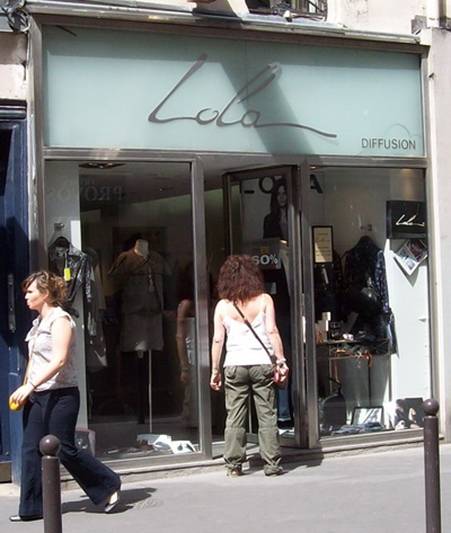
The shop on the rue du Commerce where I experienced
completely incompetent, non-existent service several days ago.
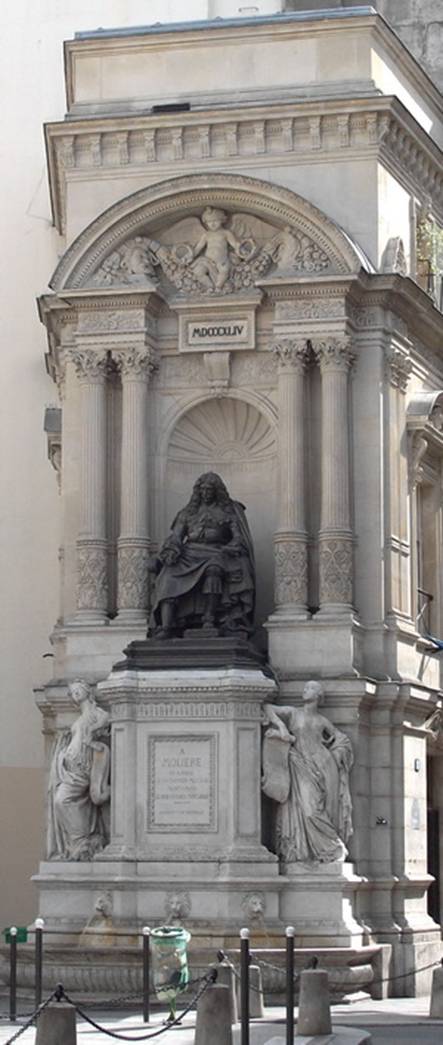
A monument to Jean-Baptiste Poquelin, known by his
stage name of Molière, by the rue Molière on the right bank.
Jean Racine in bas relief. He was another of the great French
dramatists, one who focused on tragedy, but who did write one comedy.
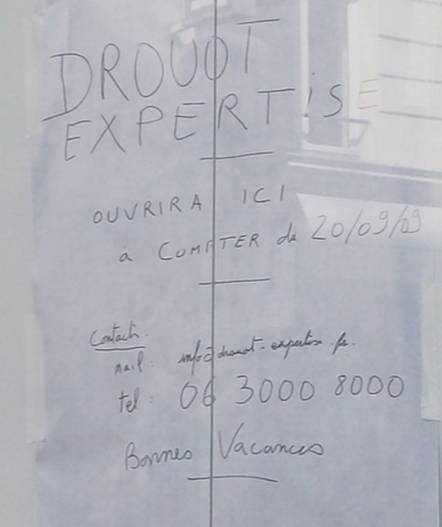
On the rue Richilieu, we found a primitive notice that
the great auction house Drouot will open one of its “expertise” offices here
starting September 20. This is the
place to bring that painting that your grandmother gave you to find out if it
is worth a fortune.
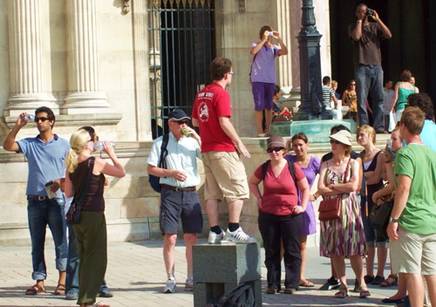
Here’s that comical, cockney red t-shirt guide with his
motley group of tourists outside the Louvre.
He is not allowed to enter the museum with them. |