Paris Journal 2008
Sign
my guestbook. View
my guestbook. ←Previous Next
→ Barbara’s home page
|
Yesterday was much cooler and wetter than I thought it was going to be. We had a long, slow day at home in the apartment, working at the computers, then we went for the usual evening walk. On the Champ de Mars, we saw some traditional Japanese dancers wearing quaint traditional outfits that almost looked like 19th century Western attire. We had planned on going out for Indian food, but when we saw that the special of the day at La Gauloise was leg of lamb, we changed our minds. It was a slow night at La Gauloise, and we were treated like royalty – or at least, like aristocrats. It was a wonderful meal. I was very hungry, so I even ordered a starter course (which we shared) – the caponata des legumes, which is like a ratatouille, but served very elegantly with a thin, tomato-red sauce spun around it on the plate, along with a trickle herb-infused olive oil. Soooo good. I’d forgotten how good this caponata is. The leg of lamb was juicy, moist and tender. The potatoes au gratin melted in our mouths. We shared the dessert plate, which has small samples of seven or eight of the restaurant’s desserts. I fell asleep earlier than usual, after such a fulfilling dinner. Today’s copy of Le Parisien has an interesting story about a chateau in the Loire-et-Cher region. Its name is La Ferté-Imbault. (The community of the same name has a population of only a little over 1000.) In 1936, Emile Akar purchased the chateau and its 800 hectares of woods. He’d made his fortune manufacturing automobiles called Amilcar. Emile was Jewish. He had to seek refuge in Marseille, where he died in 1941. Several months later, his only son died. The Vichy government confiscated the chateau and its grounds, and eventually “sold” the property to Fernand Plée. Because Emile had siblings, there are today several dozens descendents (as the newspaper calls them; I think “inheritors” is a better word since they mostly descend from Emile’s brother, Philippe). Most of the Akars, however, died in concentration camps. Following a court decision about restitution of confiscated goods to Jewish families (a decision by the commission on indemnisation at Mattéoli), the Akars filed a request for restitution in 1999. But the request has not yet been handled. Jean-François Akar, 67 years old, says, “I don’t know why.” But attention was brought to the matter when the Plée family went to court to try to stop the city of Salbris from installing a “zone logistique” next to the chateau’s grounds. Such a zone involves thousands of big, noisy trucks coming and going every day. The city’s attorney, Camille Mialot, discovered in the regional archives that La Ferté-Imbault had been taken from the Akars and sold by the Vichy government’s “Commissariat aux Questions Juives” (Commissariat on the Jewish Questions) to the Plée family. In a note dated 1943, Fernand Plée worried that the domaine “was bled white” by the new property manager who had cut the woods. Nevertheless, he went through with the purchase in 1944. After the war, in 1945, a law annulled the sale of goods that had been seized in this way. But none of the Akars reclaimed the property at that time. So, Camille Mialot argues, the property is “held” by the Akars, but they are not the “proprieters.” Whew. What legal hair-splitting is that? Anyway, the administrative court handling the complaint of the Plée family against the city of Salbris is not the court to make the determination of ownership of the property. Vincent Guinot, the lawyer for the Plée family, says the family is shocked. Four studies by notaries had validated the inheritance of their property, according to Jean-Louis Fages, one of the dozen descendents of Fernand Plée. The Akars plan to go to court. Maybe we will learn the outcome of this story in the next year or two. I’ll bet the French taxpayer is going to pay to right this wrong. It will be interesting to watch. Le Parisien interview with Jean-François Akar. Sign
my guestbook. View
my guestbook. |
Monday, August 25, 2008
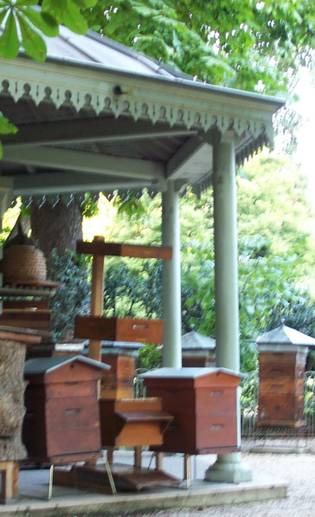
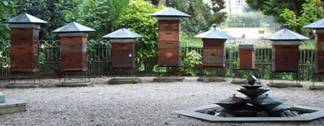
Bees are kept in the Luxembourg Gardens. These creatures are essential to the
Senat’s fruit orchard that occupies one corner of the park.
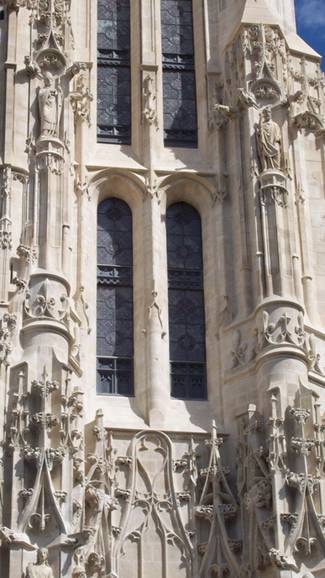
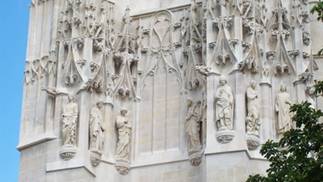
The restored Tour St. Jacques.
|