Paris Journal 2015 – Barbara Joy Cooley Home: barbarajoycooley.com
Find me on Facebook ←
Previous Next
→ << Back to the beginning
|
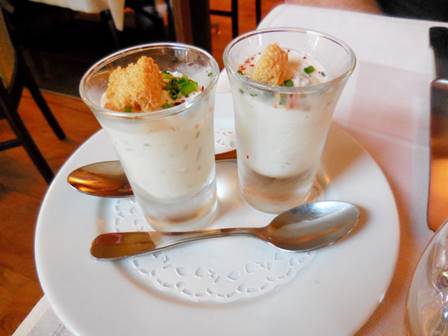
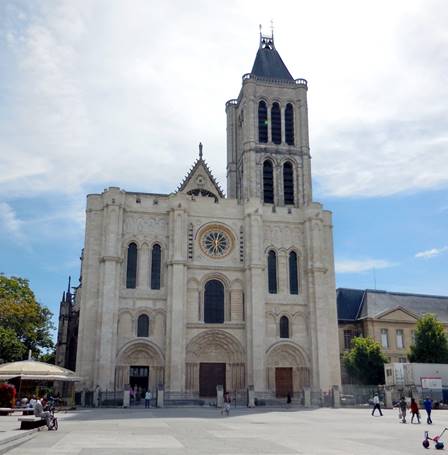
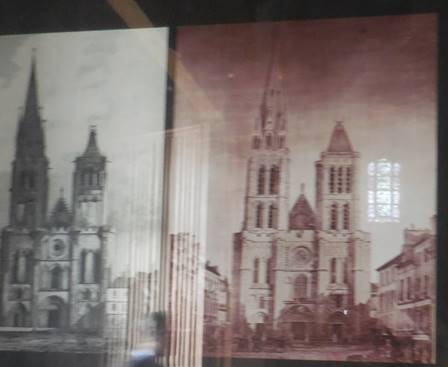
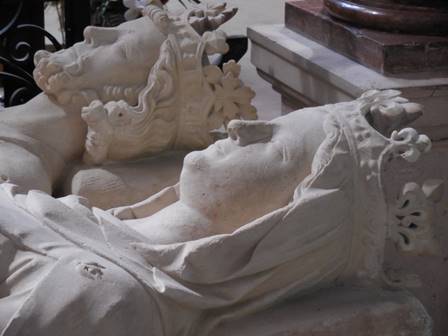
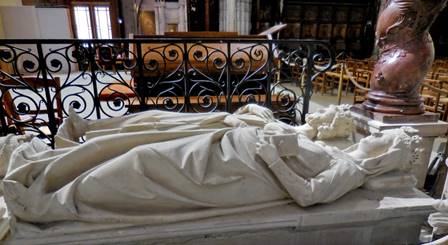
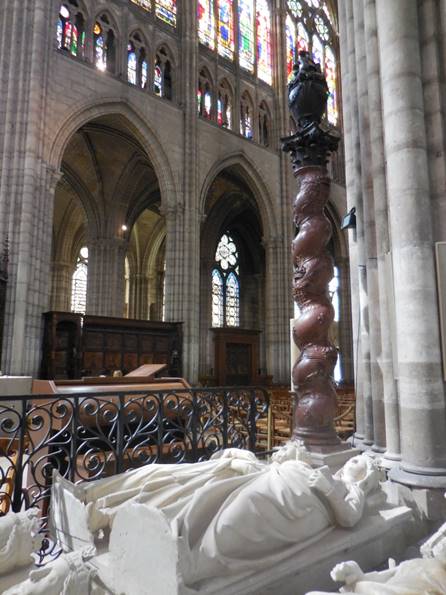
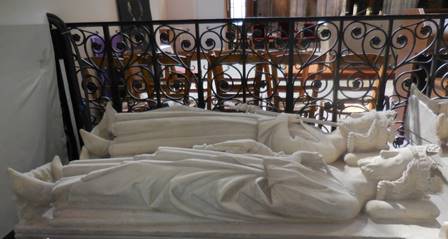
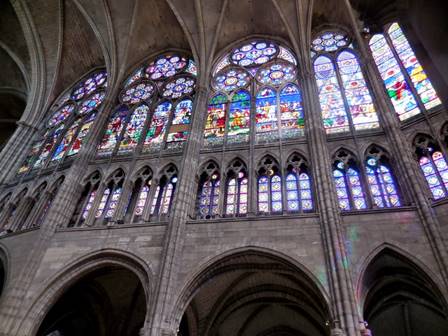
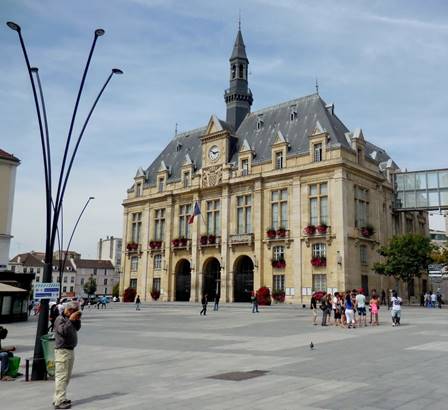
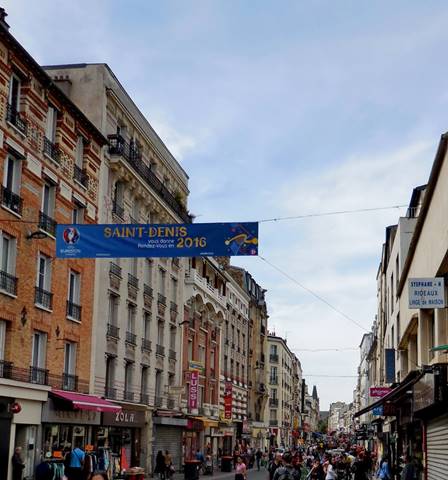
Constance of Arles (c. 986 – 28 July 1032), was a terrifying woman. I’ve read the Wikipedia article about her four or five times. She confirms what I’ve always said about royalty: they descend from people who were successful warlords; they descend from bloody bullies. Constance was the third wife of France’s King Robert II, also known as Robert the Pious. I had barely even known about her until this past year, when I did some genealogical work that enabled me to trace one line of my ancestry back, way back, in European history. Constance of Arles was my 27th great grandmother. How many 27th great grandmothers does a person have? According to this web site, that number is 536,870,912. “However, the number isn’t really quite that large. The site explains: if you go back 40 generations, you have over two trillion ancestors! Of course, this number doesn't mean you have that many unique ancestors in 40 generations. What is happening is repetition of ancestors, that is, the same ancestors appearing over and over again in a pedigree. Repetition seldom appears within the first ten generations, but the further back you go, the more repetition you are likely to find.” In other words, while I might have over 500,000 27th great grandmothers who lived back in the 11th Century or so, if I were able to trace all the ancestors of my ancestors who lived in the 16th Century, I might find that several or many of them descended from Constance of Arles, not just the one or two that I’m aware of. So, my ancestry, which includes Charlemagne, King Henry I of France, King Robert II, and other royals, is not unique at all. On the other hand, those who use mathematical models to argue that all Europeans are descended from Charlemagne are probably wrong, because that model assumes that “every person in Europe would have to have an equal chance of marrying every other European of the opposite sex,” according to a mathematician named Chang (see this article in The Atlantic). I have no idea how many people are descended from Charlemagne, but I am convinced that number is huge. What’s fortunate is to be able to trace one’s ancestry back that far, without running into a dead end. Being able to do so can be a psychological crutch. For example, when I am feeling nervous and vulnerable while walking through a crowd, I lift my chin, straighten my spine, and pretend that I’m Constance of Arles. My confidence magically returns. But I would not want to be her. If you read the Wikipedia article I referenced above, you’ll see why. The day before yesterday, I read the Wikipedia article about the Saint Denis Basilica out loud to Tom. That Basilica is where the remains of Constance of Arles, Robert II, and Henry I are entombed. That basilica is more important historically and architecturally than we remembered, so we decided we must go there for a visit. I checked the opening hours on the Basilica’s web site, and we left the apartment in late morning yesterday, planning to have a simple but long metro ride to arrive there within an hour. However, the Basilique Saint Denis metro station was closed. We exited the metro at the next and last line 13 station instead: Saint Denis Université. Outside, we began to look for the T5 Tram, which would take us to the vicinity of the Basilique Saint Denis metro station. But I realized that it might just be more convenient to walk. Then we noticed temporary signs pointing the way to the Basilica, promising that it would be just a 16 minute stroll. We walked, and we saw more of the suburb of Saint Denis than we’d planned. I was initially and unnecessarily worried about it because I’d read other visitors’ reviews claiming that this was a “bad neighborhood.” Nonsense. It is a perfectly normal middle-class neighborhood, and a university town to boot. I now think those reviewers were simple racists who reacted wrongly to the fact that many Saint Denis residents are people of color. That middle class suburb is one of the most diverse I’ve ever seen. We enjoyed the stroll down tree-lined avenues, leading to the town center. Part of the way, we were walking along the edge of the University of Saint Denis campus, also known as the University of Paris VIII. We finally reached the Basilica after making our way through a small but dense commercial district. We emerged from that district on a very broad and open square. The Saint Denis town hall faced the square on one side, and the Basilica dominated another side. We entered the church and were amazed at the size, soaring arches, and gothic architecture. The structure is one of the earliest and most significant examples of gothic architecture. We quickly decided that we better see the Necropole first, and find my ancestors tombs, because we might not have the energy after thoroughly visiting the entire church. We exited and walked around to the side, where we bought tickets to see the Necropole and crypt. By the 1200s, the abbey at Saint Denis was already very important as a religious center, and the decision was then made to move the remains of many of France’s earlier royals to tombs in the Basilica. Artists were commissioned to make recumbent statues of early royals who were moved. Among them were Constance of Arles, Henry I, and Robert II. I was overwhelmed when we first entered the Necropole part of the church. There are hundreds of people buried there; how would I find these three ancestors? Once we got our bearings and Tom asked the staff person at the entrance, we were able to find these three tombs with no problem; they are some of the more important ones in the Basilica. After finding them, we relaxed and looked around at everything. The stained glass windows are spectacular, if incomplete. The gothic grandeur is amazing. We were bedazzled by the Basilica. After a good, long visit there, we were very hungry. We walked across the square and had lunch at the Mets du Roy restaurant, out on the terrace on the square. The lunch was very good (salad for me, burger and fries for Tom), but the 45 minute wait for the food to arrive was a bit much. We did not complain, but the server apologized anyway. After lunch, we walked back out to the center of the square and noticed that the street leading to the square, directly opposite the Basilica, was a thriving, bustling shopping street filled with throngs of pedestrians. We delightedly joined the fray, walking from one end of the street to the other, where a more modest Saint Denis church stood, and back again. At the square, we looked into other ways to return (Taxi? Bus? Tram?) but finally decide to walk back to the Saint Denis Université metro station. The metro is just so easy . . . . We arrived back at the apartment at about 4:30PM, just in time to rest up and clean up for dinner at L’Epopée. After yet another pleasant stroll, we were there, at that familiar place, ready to dine, on the avenue Emile Zola. We were given a mis en bouche made from creamy cheese, white wine, herbs and garlic, and then we indulged in a plate of 12 escargots. Something was off about the escargot seasoning. But our main courses were wonderful.
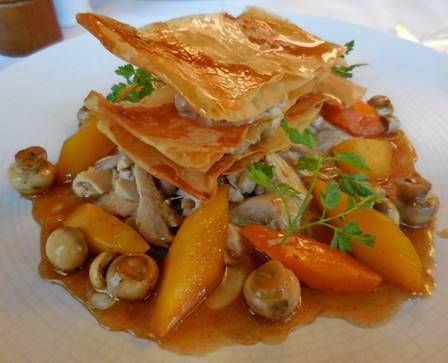
I had a millefeuille of chicken and veggies, which I playfully called a “chicken pot pie.” As you can see, it was far prettier and more interesting than a chicken pot pie. The orange veggies are actually turnips. Yummy.
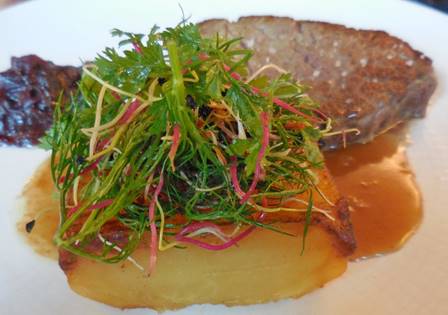
Tom had a steak, which didn’t look as good as it was. But the steak was very fine, and so was the little block of buttery potato, which was dressed by a colorful “wig” made from fennel and other herbs. We joked about this being a “hedwig,” which is the name of Robert II’s grandmother (Hedwige of Saxony, daughter of the German king, Henry the Fowler).
We shared profiteroles for dessert; ah, such wonderful dark chocolate sauce! Back at home in the apartment, we chatted about the day. We decided we must return to the Basilica again and again, to check on the progress of the ongoing renovations, to see the renovated tomb of Dagobert I, and to visit more dead relatives. Next time, I want to pay more attention to the tomb of Hugh Capet (another ancestor), father of Robert II and originator of the royal House of Capet. Hugh Capet was king of the Franks from 987 to 996. So much to do, so many dead relatives to visit . . . . |
Thursday, August 6, 2015
The
Basilica of Saint Denis.
Two
old images of the Basilica showing its western tower, which will be restored
beginning in late 2015.
My
27th great grandparents, King Robert II and Constance of Arles.
Henry
I in the foreground (Louis le Gros, who is quite
small, in the background).
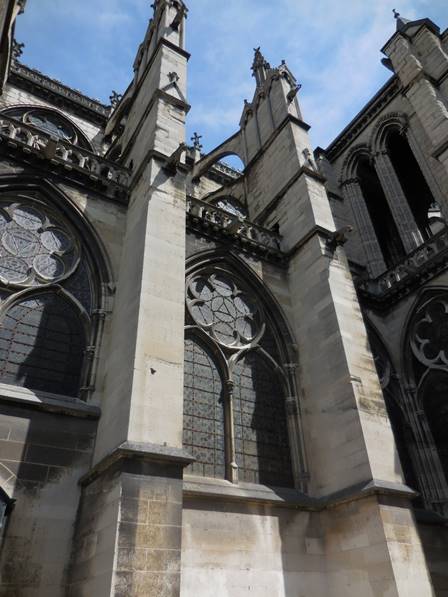
Real
flying buttresses on the Basilica.
The
Saint Denis town hall.
The
main shopping street in Saint Denis stretches from the square where the
Basilica is located, to the simple Saint Denis church. Shops selling inexpensive clothing were particularly
busy. |