Paris Journal 2015 – Barbara Joy Cooley Home: barbarajoycooley.com
Find me on Facebook ←
Previous Next
→ << Back to the beginning
|
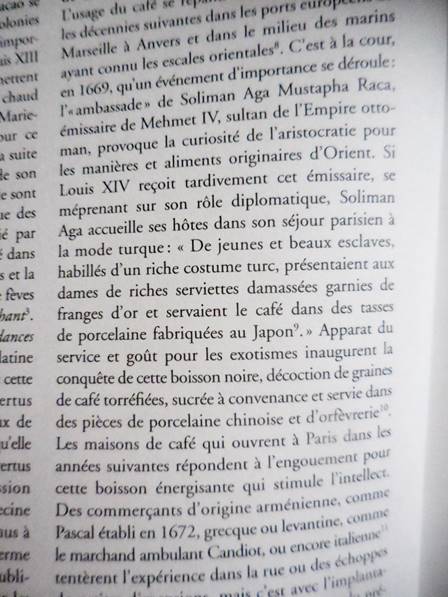
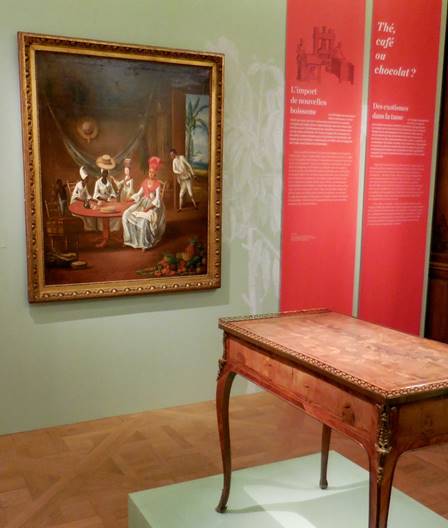
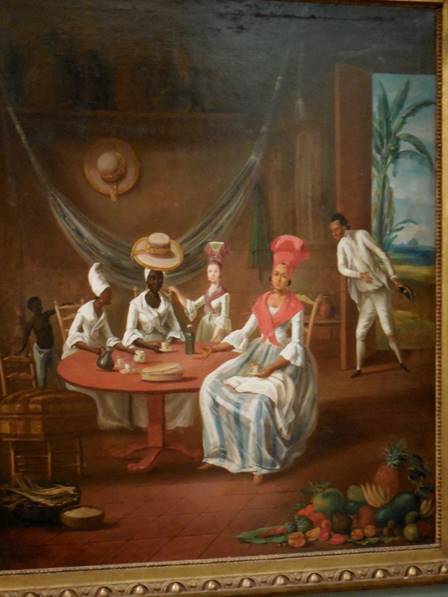
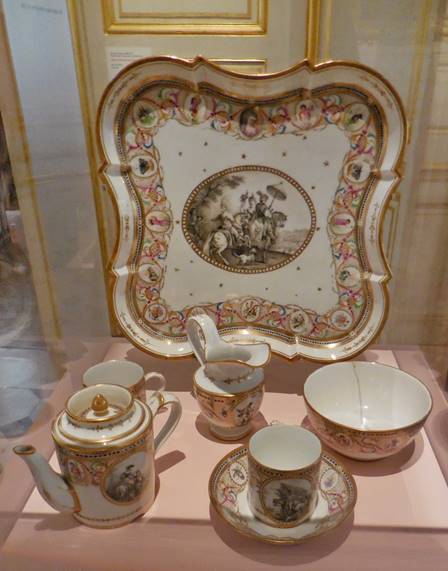
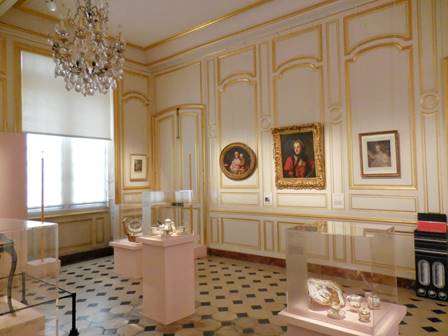
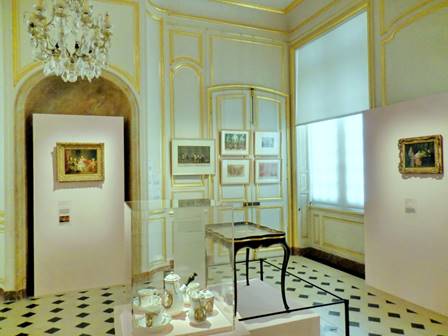
Tea, coffee, and chocolate. These three once-exotic beverages are the subject of the latest special exhibition at the Cognacq-Jay museum. The Cognacq-Jay is one of several City of Paris Museums. The city does a good job of promoting them all. We’d seen the attractive, romanticized images on the billboards promoting the Tea, Coffee, or Chocolate? exhibition. Tom particularly wanted to see the show because of the porcelain that would undoubtedly be a big part of it. We recently saw the Musée de Sevres, so why not see more great porcelain -- in the middle of Paris this time? The show explains how these three exotic drinks were introduced to the aristocracy in Europe in the 1600s, and became very popular among those of that class in the 1700s. Since the Cognacq-Jay is the city’s official museum of the 18th Century culture and decorative arts, this was definitely the place to have the exhibition. The show was small, and it focused on the consumption of these beverages and the build-up of coffee-related businesses such as cafés and porcelain manufacture; not so much on the production of coffee, tea, or chocolate. While the origins of the beverages were mentioned numerous times in the show’s expository plaques, there was essentially no mention or discussion of slavery. This is not the first time I have scolded the French for sweeping this subject under the rug, nor will it be the last. One plaque referred bluntly to the “plantation system,” without further explanation. A large painting at the entrance to the show depicted a “mixed family,” in an idealized setting. The reality, which went without mention, is that the French system of slavery in the West Indies was extremely brutal and extensive; the economy that it fueled was massive. Much or most of the wealth we see in Paris that still exists in the form of buildings and art dating from the 18th Century came from slave labor, directly or indirectly. Follow the money. Yet you wouldn’t know it from this romanticized, fairly tale show on the rise of the “tea, coffee, and chocolate” consumption by the upper classes in Europe. Don’t get me wrong – we fully appreciate the beauty of the fine porcelain pieces we saw in the show. But we found the omission of slavery in the subjects presented to be dishonest and misleading. In search for a more meaningful representation, I picked up the book published as part of the show, and read through its entire main text (most of the book was photographs, illustrations, and captions). There was only one mention of slavery, in the middle of this page:
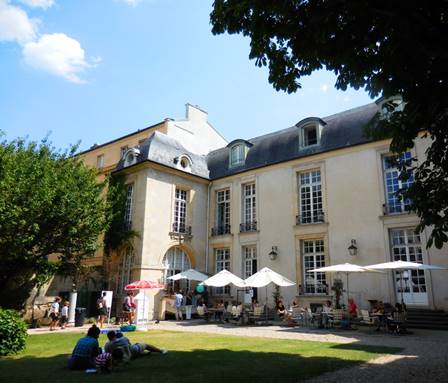
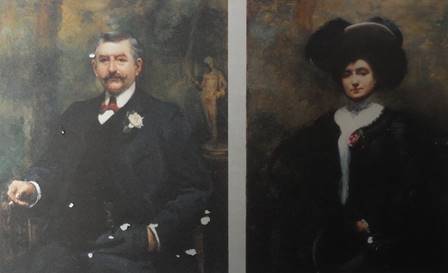
This description of how a diplomat arranged for coffee to be served to artistocrats in Louis XIV’s France says, “Two young and beautiful slaves, dressed in a rich Turkish costume, presented to the rich women damask napkins fringed in gold and served the coffee in porcelain cups that were made in Japan.” Nowhere in the book was the role of the slavery system in the production of coffee (or tea or chocolate) ever explained or admitted. After thoroughly reviewing the pretty but disingenuous exhibition, we toured the museum’s permanent collections. These collections are what the Cognacq-Jay couple collected during their lifetimes, and then bequeathed to the City of Paris. Ernest Cognacq and Marie Louise Jay had no children. The original Cognacq-Jay museum was adjacent to the Samaritaine department store which the Cognacq-Jay’s founded. In 1986, the museum was moved to the Hotel Donon, a stately home that the City of Paris had restored. La Samaritaine no longer exists; the old department store building is vacant. While the Cognacq-Jay collections are almost exclusively 18th Century pieces, one of the most remarkable items is a 17th Century painting by Rembrandt. After seeing the entire museum, we needed a break. The Cognacq-Jay museum has no café, but it is conveniently located next to the Swedish cultural center, which has a lovely outdoor café of sorts in its garden.
We entered that garden, and I saved us a table while Tom purchased a huge piece of carrot cake for him, a veggie/bagel sandwich for me, and a bottle of water. After that break we were ready for more, so we went to one of our favorite museums of all, the Musée Carnavalet, which is the official history of Paris museum. It is just around the corner from the Cognacq-Jay, in the Marais. The Carnavalet has a wonderful and whimsical collection of old Paris signs that date back to the days when most people were illiterate. The signs rely on images to convey the nature of the business they represent. Entire rooms from stately homes that were demolished have been dismantled and reassembled in the Carnavalet. Those rooms are jewels. Here are two examples:
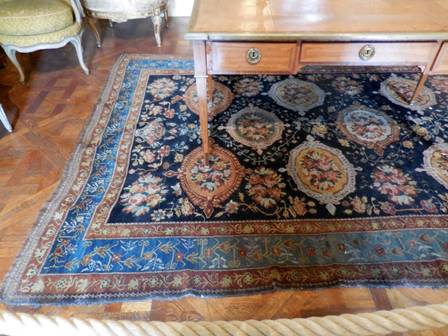
We noticed that the Carnavalet has a lovely collection of Oriental rugs, all donated at different times by different people. We were particularly interested to see this Karabagh, which was made to look like a French Aubusson carpet:
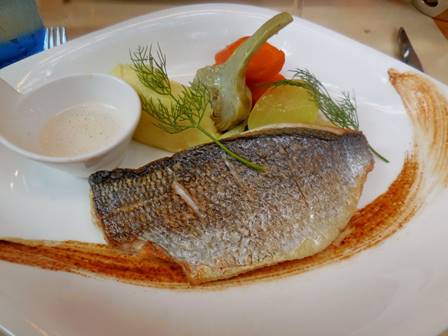
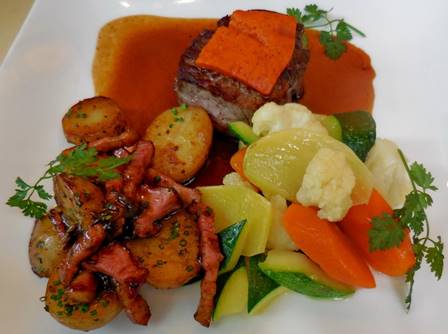
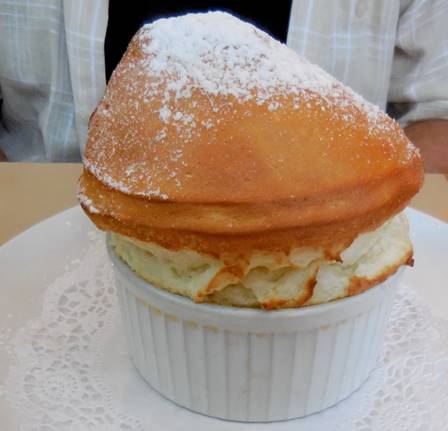
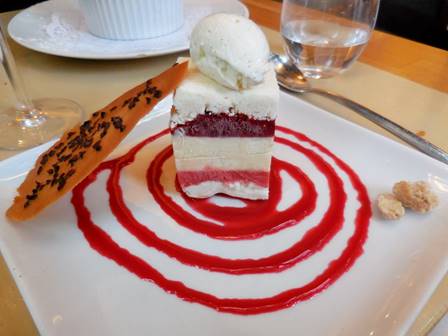
I should mention that admission to City of Paris museums is free for the permanent collections; one only needs a ticket for special exhibitions. At the Carnavalet, we did not need to buy a ticket, but opted instead to make two $5 donations – a suggestion that the City of Paris is now presenting at the museum ticket counters. The cashier seemed to think we were particularly generous to make two donations; we thought it was the least we could do, because this museum brings us joy and it is a very expensive building to maintain. Later in the day, dinner brought us more joy. We dined at Axuria on the avenue Felix Faure, and it did not disappoint. Once again, the chef did a fine job with the vegetables. My fish, filet de dorade royale, was perfect, as was Tom’s steak. Tom had the unforgettable soufflé au Grand Marnier for dessert, and I had the fabulous frozen Vacherin – a real treat on a warm evening. At home after dinner, we listened to the happy music of Kid Ory’s Creole Jazz Band and watched the last pink clouds fading from the sky. |
Saturday, August 8, 2015
“Mixed
family,” painting at the entrance to the special exhibition in the Cognacq-Jay museum.
Above
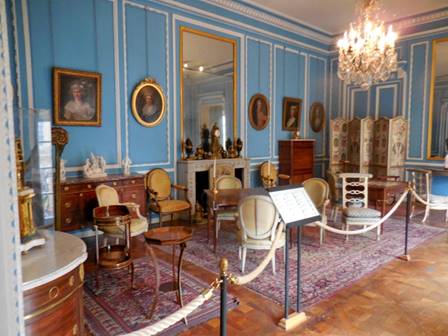
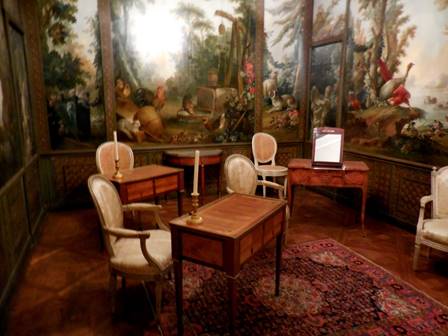
and below, a couple rooms in the special exhibition at the Cognacq-Jay museum.
Ernest Cognacq
and Marie-Louise Jaӱ.
Filet de dorade royale (above) and steak
(below) at Axuria, on the avenue Felix Faure.
Soufflé au Grand Marnier (above) and Vacherin glacé
(below).
|