Paris Journal 2009 – Barbara Joy Cooley Home: barbarajoycooley.com
Sign
my guestbook. View
my guestbook. ← Previous Next
→ Back to the beginning
|
I’m still sleeping way too much
since the Great Stepstool Fall, and one of my arms is hurting more instead of
less, so I may soon experience the French health care system. Tom has already experienced it in the past. While I have certainly written
about the imperfections of the public hospitals here, I have nothing but
respect for the total French health system which absolutely will not allow
French families to go bankrupt due to health care costs. I subscribe to an e-mail
newsletter called Americans in France. Its editor wrote the following in the edition
that I received today. Note that the
coverage provided by the French government-run insurance INCREASES for
chronic, expensive diseases like cancer.
So instead of running up against coverage limits during a serious
illness and then going bankrupt, as many American families do, the French
families have the most coverage in the times of the greatest medical
need. And there is no pre-existing
condition exclusion. That would be
un-French and probably illegal. French Healthcare I recently spent a three week
vacation in the US. The debate about healthcare reform was going strong.
France came up a few times, mostly by those opposed to the reforms being
offered. I thought I’d put my two cents in about how French healthcare works,
based upon personal experience. The government insurance is
financed through taxes. Looking at my last pay slip about 13.5% of what I
made (gross) was paid into the Assurance Maladie Fund. The accounting
is to the advantage of the worker I paid .75% of my gross income to Assurance
Maladie, whereas my employer paid a 12.8% tax on my gross income. The 70% reimbursement figure is
generally the lower end of coverage; long-term illness (like cancer) are
covered at 100%. Many French have private top up insurance that covers
whatever the French state doesn’t. From experience what seems to fall below
70% are things like medication and eye glasses. But I’ve noticed that
medication in France seems to be cheaper than in the US even if you have to
pay the full cost. e don’t have private top up insurance but when we looked
into buying some, monthly premiums looked to be about 100-150 euros per month
for a family of three. Coverage varied but because Assurance Maladie
covered anything long-term there aren’t any preexisting conditions. In fact I
believe an insurer only has a right to minimal health information like age
and sex. To give you an idea of some
everyday healthcare costs in France; it costs 22€ to see a doctor (it’s more
to see specialist), 70% would be paid by Assurance Maladie. The
patient cost is 6.60€. In November of last year my son had an appendicitis
and spent fives days in the hospital. Our total bill (it was just one page)
came to 98€. That’s not to say that French
healthcare is all roses. The Assurance Maladie’s general fund is in
debt to the tune of billions of euros, has been for many years. I like the
healthcare I’ve received in France but finding the money to pay for it isn’t
easy. Also some areas have a shortage of doctors and nurses. Thanks for reading my newsletter.
Help spread the word - forward this email to a friend! Jeff Steiner Yesterday, we decided to go to
the market at St. Germain instead of the Carrefour grocery store. It is more expensive to buy food at the
market, but the quality is generally much higher. We’re tired of saving money, I guess. We demand the good stuff. We bought brie, blue cheese
from the Auvergne, goat cheese (a crottin), non-sterilized milk, orange
juice, bananas, country pate, ham, country bread, and small
strawberries. It is all very, very
good. The market is closed in the
afternoon until 4PM, when it reopens so it can sell good things to working
people until 8PM. When we started out,
it was a bit before 4PM so we went to Muji to check it out first. We were disappointed. This store, which was once so interesting,
is now very blah. I hate it when this
happens; I can think of so many retailers in my lifetime who’ve gone from
interesting to blah. I cannot stand
this trend! But the market is not
blah. It is still interesting. We strolled from there to buy newspapers in
the tiniest of newsstands, a kiosque near the entrance to the Mabillon metro
station. Somehow, two men were
squeezed into the little kiosque. They
were smiling and preparing small fold-up umbrellas for sale; the sky was
threatening to rain. Last night we had a lovely
stroll through the Luxembourg Gardens, all the way down through the Marco
Polo Garden and along the boulevard Montparnasse to L’Abri Cotier, my favorite
Corsican restaurant. It specializes in
seafood, and features a large tank with live lobsters in the front/side
window. I had a craving for sole meunière, so that’s what I had,
and it was a soul-fulfilling experience.
Tom had the three-course menu at 27 euros (prices have dropped a tiny
bit since the menu was posted on their web site). His starter course was a tartare courgettes tomates à la brousse de
brebis. I had several bites of
it. Very yummy and fresh, with chopped
tomatoes, zucchini, herbs, a super light vinaigrette, and goat cheese. Tom’s main course, a chateau de boeuf roti, is not on the
web site menu. Over the starter course, we had a discussion about what his
main course would be like. He thought
it would literally be roast beef. I
said I thought it would be more like a thick steak, so thick that the French
consider the cut to be a roast, but it would be cooked like a steak. Like chateaubriand. I was right. The steak was excellent, and it came with a
superb little potato pancake as well as carrot rings topped with wedges of
zucchini and broccoli. Dessert was pain perdu with pears and caramel
sauce. Absolutely delish. After dinner we walked in the
rain. We left the boulevard
Montparnasse and took the rue Bréa then the rue Vavin to reach the edge of
the Luxembourg Gardens where we followed the sidewalk along the park’s border
to come home to the rue Férou and rue Canivet. I thought this was no doubt the route that
Hemingway would walk when he was coming home from Le Select to the rue Férou. We were charmed by the rue
Bréa, which I don’t think we’d walked along before. We’ll have to go back there during the
daylight sometime. The street is
named for Jean Baptiste Fidèle Bréa, a brigadier general, born in 1790, and
killed by insurgents in a public spectacle on the avenue d’Italie on June 25,
1848, during what is known as the June Uprising, a French workers’
revolt. Specifically, he’d been put in
charge of anti-insurgency operations on the left bank, and he succeeded in
pushing the insurgents outside the city limits. Then, in the hope of leading them back in
peacefully, he went out to talk with them.
That’s when the insurgents seized him and later killed him. Earlier in 1848, the French
government created National Workshops to help the unemployed. The workshops only lasted a few months, and
then were closed because of expenses.
This enraged the workers, who revolted. The revolt was harshly repressed; 1500
workers were killed, and 15,000 were deported to Algeria. The final act of repression was the passing
of a law severely restricting the activities of political clubs, and
forbidding the participation of women and children in the club activities. All of this occurred not long
before the outbreak of the American Civil War. It is very interesting, indeed. |
Thursday, September 3, 2009
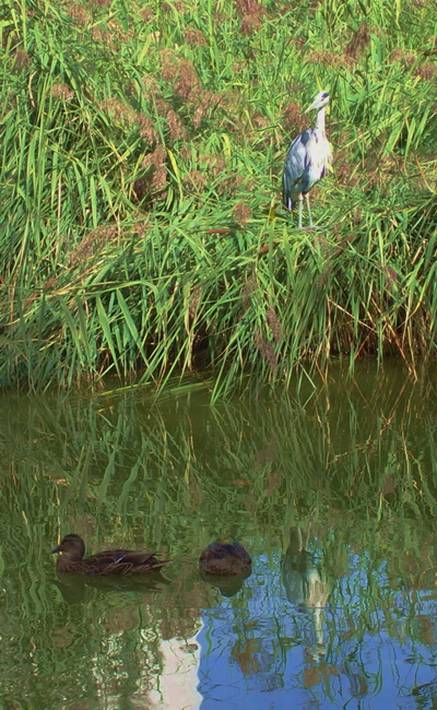
No,
this heron is not in Sanibel. This is
the Parc Bercy in Paris.
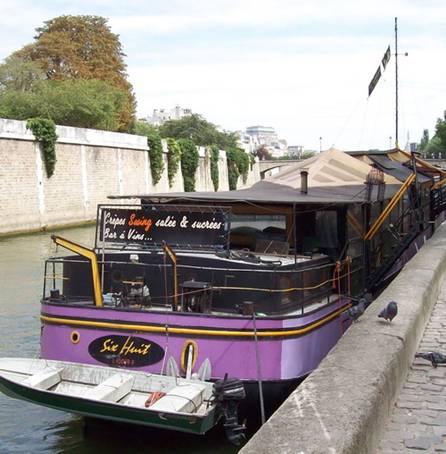
The
Six Huit Café boat on the Seine.
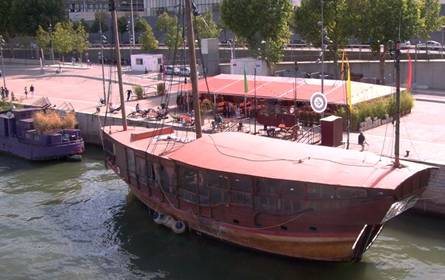
Another
interesting café on the Seine, near the Mitterand Library.
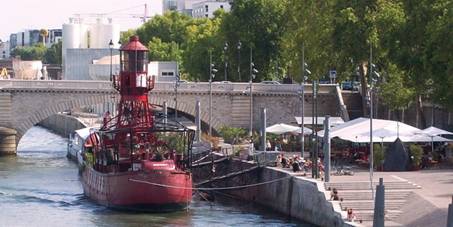
A
light boat near the Pont de Tolbiac.
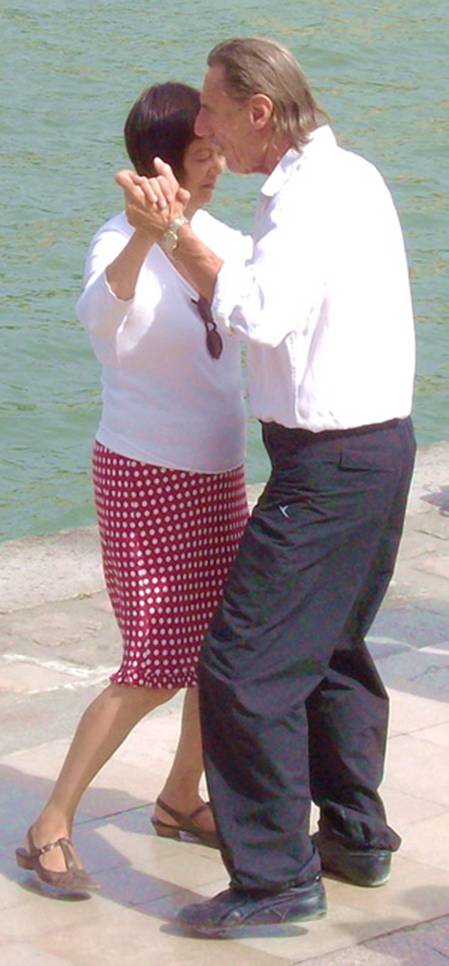
Ballroom
dancers in the Square Tino Rossi on the Seine. |