Paris Journal 2009 – Barbara Joy Cooley Home: barbarajoycooley.com
Sign
my guestbook. View
my guestbook. ← Previous Next
→ Back to the beginning
|
We must return to one of the
most important news stories of the summer in France: the deadly green algae on beaches in
Brittany. A 48-year-old man has died
after being in contact with the green algae.
He was a truck driver doing some work at a compost factory. The paramedics first concluded that he’d
had a heart attack because of his weight.
This happened on July 22. But
the president of the compost factory (where the decaying algae is taken and
treated), Thierry Burlot, made his doubts about that diagnosis known in a
letter that he wrote on August 25 to the prefect of the Côtes d’Armor,
Jean-Louis Fargeas. Fargeas’s doubts arose when the
prime minister, François Fillon, spoke about the extreme toxicity of the
decaying algae when he visited the Côtes d’Armor on August 20. Local groups also denounced the algae as
dangerous. The prosecuter of the
République de Saint-Brieux, to whom the prefect had sent a copy of Burlot’s
letter, will decide at the beginning of this coming week what to do about
this issue. The victim was employed by
a transport company in Plérin and lived in Lanvollon. At the time of his death, he was unloading
trucks of green algae in the afternoon. The City of Paris has a special
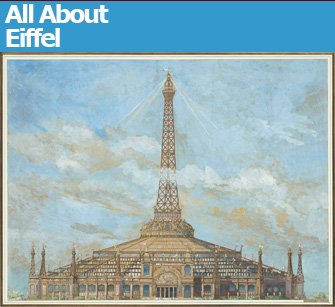
exhibition about the Eiffel Tower and its constructor, Gustave Eiffel,
showing at city hall. The show has
been extended through the end of this month, so we decided to go yesterday
just before closing time. I’d found the following article
about the exhibition back in June.
Fortunately, I’d saved it in OneNote, because it is gone from the
internet now. It tells the story
fairly well:
After visiting the fascinating
exhibition, we walked back to our neighborhood, crossing once again the
ancient Ile de la Cité, this time in front of Notre Dame, as the church bells
sounded at 7PM. We paused to meditate
in the graceful, old Saint Severin church.
Near the Saint Germain market, we went back and forth, trying to
decide whether to eat dinner at our local Bristrot de la Grille Saint
Germain, or to try the new place in the market, Terrazza St.-Germain. We decided on the latter. We need to find a new Italian place that we
can rely upon. We’re not so sure about
Le Petit Mabillon anymore, after Tom experienced a not-so-good carbonara
sauce there. And the place on rue de
Ciseaux isn’t so well run, and the food was just okay last time we went
there. The Terrazza has been catching
my eye as I go by it frequently, because it seems to be attracting the locals
and it is seemingly well-capitalized and well-managed. It is located along the
northern edge of the market, and you can enter the restaurant either from the
street or from within the market.
Formerly, a Nicolas café and wine store had been located there. A couple years ago, the Nicolas café and
shop suddenly disappeared, without warning.
We were very disappointed about that, because we like the food and the
prices at Nicolas cafés. Tom ordered the spaghetti
bolognese (13.50 euros), which may sound boring, but it is a test to see if
the restaurant serves much meat sauce on the pasta. To challenge the restaurant in a different
way, I ordered the veal scaloppini marsala (16 euros), to see if the meat was
properly cooked, tender and tasty, and not like shoe leather. The restaurant passed the tests
with flying colors. Next, we shall
test it for competency with seafood.
If it passes, it will go on the restaurant recommendations
page and accompanying Google
map. The Terrazza serves its own
excellent flatbread instead of baguette slices from a local bakery. It also has a deli counter where you can
buy various Italian dishes to take home.
The servers are handsomely dressed in dark gray shirts and black
trousers. The food is very well
presented. The veal was served with a
delicious side of penne pasta and a little green salad. The plates are large and colorful, and the
servings are generous enough but not overwhelming. We couldn’t manage dessert, but
maybe next time. When we got home in the
evening, the literary critic’s TV was too loud again. We now have an effective system for
communicating about this. We’ve used
it about five times now, and it works every time! If his TV is too loud, one of us stomps on
the floor three times. If the TV is
outrageously loud, one of us stomps four times. The literary critic then lowers the volume
on the TV! And generally, he keeps it
down. This is important because he
goes to sleep with the TV on, therefore it is going all night. He knows enough about who we
are that I think it is a bit embarrassing.
Here’s the situation: Author and professor emeritus
of American literature and his writer/editor wife return home in the evening
to sit down and read until bedtime.
Meanwhile, the French intellectual, the literary critic, has his
television blaring, making reading difficult.
What does it say about the culture?
At any rate, I’m happy that
we’ve worked out a system for communicating without having embarrassing
face-to-face discussions about it. The literary critic is
fortunate that we are south Floridians; it is our habit to immediately remove
our shoes when we come home. So, we
don’t make much noise at all as we walk around over his apartment. We also keep our voices very low if we talk
at all in the courtyard or stairway, and, as I said before, we never slam the
apartment door. We even water the
plants during drought. Not bad for
short-timers, I’d say. |
Saturday, September 5, 2009
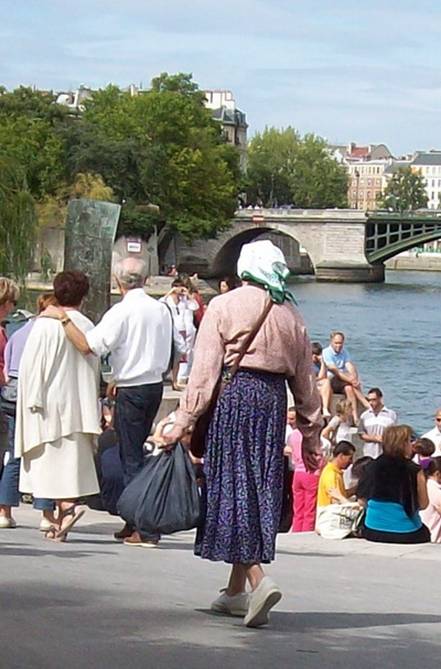
Woman
in a babushka walks along the Seine with her sack.
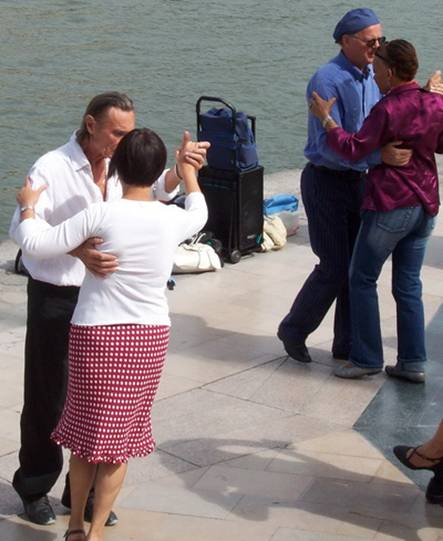
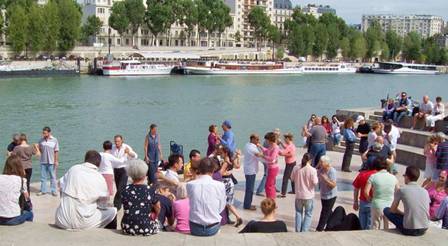
More
dancers on the Seine at the Square Tino Rossi.
Another
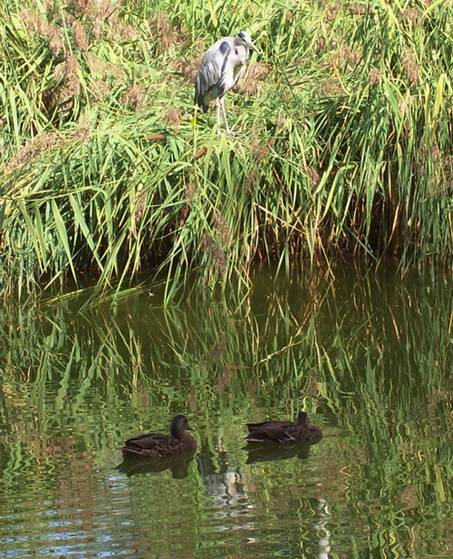
view of the Great Blue Heron and ducks at the Parc Bercy.
While
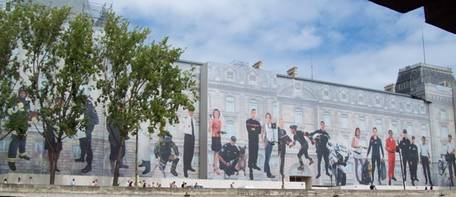
the prefecture of the police is undergoing renovation on the Ile de la Cite,
the scaffolding is covered with this friendly silk screened mural.
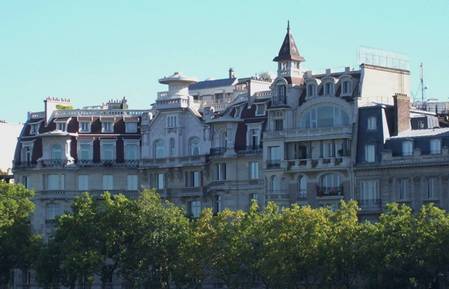
Buildings
on the left bank with their interesting rooflines.
The
Place de la Concorde. |
||||||||||||