Paris Journal 2011 – Barbara Joy Cooley Home: barbarajoycooley.com
Photos
and thoughts about Paris
Sign
my guestbook. View
my guestbook. 2010 Paris Journal ← Previous Next
→ ← Go
back to the beginning
|
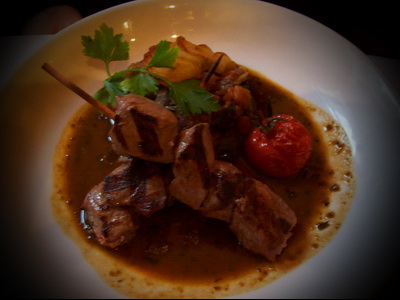
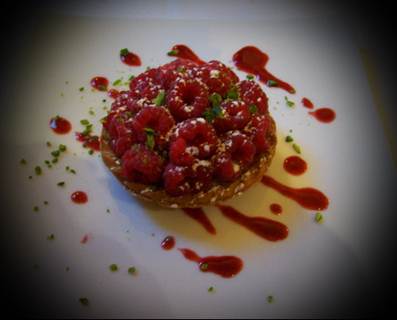
It’s back! The green algae is back! No, I’m not talking about home in southwest Florida. I’m talking about here, in France. Specifically, in Brittany. I’ve written about it in prior years, when the toxic fumes from the massive amounts of algae rotting on the beaches killed a horse, and possibly a jogger years ago. And in 2009 it probably killed Thierry Morfoisse, whose job it was to collect and remove the algae. This year, the algae started up earlier. Usually it begins to accumulate on the beaches in July, or June at the earliest. This year, with the unusually hot Spring weather, it started earlier. So it has been rotting longer, and now has killed, so far this season, no fewer than 36 wild boars, one muskrat, and one badger – all since July 7, and all on the beach at Saint-Maurice de Morieux. A large amount of money is spent removing the algae from the beaches of Brittany, but as those of us in southwest Florida know, it is a mammoth job and it is impossible to get it all, all the time. Tide takes it out, and brings it back in again. The situation is out of control in Brittany. Now local people are starting to worry that a child who briefly escapes the watchful eye of his parents could be killed – by the hydrogen sulfide fumes that the rotting algae emits. That stuff stinks to high heaven, so I’m not sure why anyone would want to be anywhere near that beach. But kids will be kids, I guess. Real estate values of the near beach homes have plummeted. Both the environmental and the agricultural research institutes agree that the hydrogen sulfide fumes from the algae are what killed these animals. But the prefecture of police for the Côtes d’Armor region isn’t 100 percent on board, because the autopsies show that one of the wild boars didn’t have any hydrogen sulfide in his lung tissue. Could it be that he just died of a broken heart? The water and rivers association for Brittany wants all the beaches where the algae is not removed daily to be closed. As of July 18, 32,000 cubic meters of algae had been removed this season. This is 4,000 cubic meters more than last year. Two area organizations retained an attorney who, on Friday, filed a claim against the government of France for “putting in danger the life of another,” due to the government’s lack of effectively addressing this huge environmental problem. The problem first started showing up in the very early 1970s, so this isn’t new. Forty years of discussions about it haven’t yielded an effective solution. The cause is an intensification of agricultural practices, especially with livestock, that started back in the 1970s in order to increase production and lower costs of food. In July 1971, the green algae problem in Saint-Michel-en-Grève in the Côtes d’Armor caused the city council to ask the French government for help. So the government did a study, determining that each year more than 200,000 tons of green algae are produced, part of which ends up on the beaches in about 109 places in Brittany and some other places to the south, up to the Île d’Oleron and in Normandy. Like all green plants, Le Parisien explains, green algae gobbles up the vegetable and animal waste, and has grown at the same pace as the intensification of agriculture in the region. Brittany has the distinction of having half of the livestock in France, according to Benoit Hartman, spokesperson for France Nature Environment. Nitrogen (called azote in French) that comes from agricultural sources accounts for 98 percent of the nitrogen consumed by the green algae, says Jean-Louis Peyraud, the scientific director of France’s National Institute for Agronomy Research (INRA) in Rennes. He says that 75,000 tons of nitrogen is in the rivers of Brittany, which flow into the estuaries. Benoit Hartman says that the only solution is for those who raise livestock to completely change their system. Yet, he says, “we demand the farmers to produce more, and to do it less expensively – the agricultural agents don’t have any interest in cooperating when the cost of cleaning up the green algae is paid for by the French government, the regional and local governments, and the taxpayers.” Nitrogen doesn’t sound so appealing to us, so we gobble up French food instead. Last night, I selected La Gitane for our dining adventure. I am starting to adore this place owned by Olivier and Corinne Mayeras, former journalists. Corinne greeted us, and she looked happy to see us. She allowed us to select whatever table we wanted. I asked for one in the rear of the dining room, because we had not yet dined there. I appreciated my seat particularly because I could watch the entire restaurant in the mirror on the wall ahead of me. We like to watch and analyze the operations of restaurants that we admire. This one, La Gitane, is run with precision, grace, warmth, and good taste. I ordered the Dorade (sea bream), one of my favorite fishes, which for some reason I had not yet had this season. Tom ordered the lamb brochettes, Niçoise style – the special of the day. My Dorade could not have been better. It was perfectly cooked, and was served on a pile of delicious tagliatelle pasta mixed with delightful, finely julienned vegetables. It all rested on a pool of a lovely, savory light-brown sauce that was called crème de tomates. Tom’s lamb brochettes were delicious, and they came with a ratatouille shaped into the size of a tartelette. The dessert special for the day sounded tantalizing – a raspberry tartelette, with pistachios. So we each ordered one. The raspberries were not sweetened, and so they exploded with flavor in our mouths. They rested on a layer of lightly sweetened pistachios ground into a paste – all inside a homemade crust that makes you think of Grandma’s best pies. We finished with a cup of espresso for Tom, and calvados for me. I think La Gitane has become our new favorite restaurant in Paris. Sign
my guestbook. View
my guestbook. Note: For addresses & phone numbers of restaurants
in this journal, click here. |
Friday, August 5, 2011
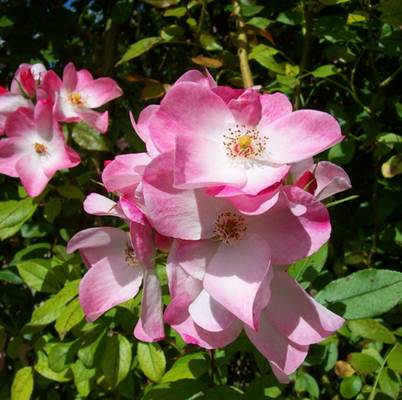
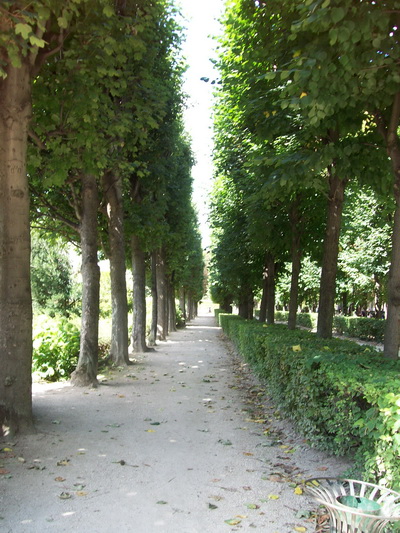
Old
fashioned roses and an allée of trees in the garden
at the Rodin Museum.
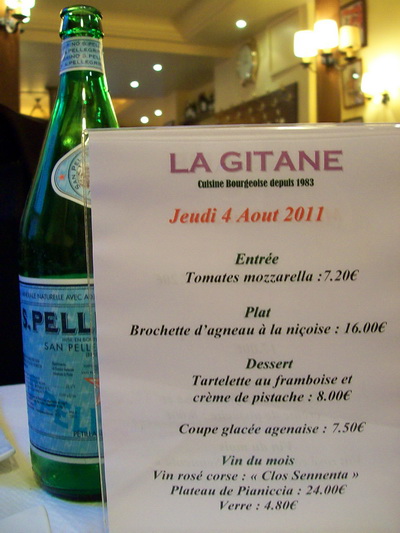
The daily
specials at La Gitane restaurant, Aug. 4, 2011.
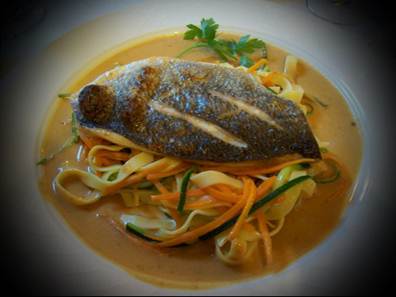
Dorade (sea bream) for me, lamb brochettes
for Tom.
Last but
not least, the wonderful raspberry and pistachio tartelette. |