Paris Journal 2009 – Barbara Joy Cooley Home: barbarajoycooley.com
Sign
my guestbook. View
my guestbook. ← Previous Next
→ Back to the beginning
|
The Ile Saint-Louis
has mystique. Its old buildings and
hidden courtyards give it a slightly haunted and hidden ambiance. One of those treasured buildings, the Hôtel
Lambert, is a stately home that is now the center of some controversy. It was originally built in the 1640s. The controversy is supposedly
one of historic preservation, but it may also have elements of something
else, I think. The current owner since
2007, Prince Abdullah Bin Abdullah Al-Thani, the brother of the emir of
Qatar, wants to restore and renovate the home, which is currently
crumbling. The architect hired by the
prince to oversee the project is Alain-Charles Perrot, the same man who
oversaw the restoration of the Opéra Garnier and the Grand Palais. Nobody could say he does not have the
credentials for this residential job on the Ile Saint-Louis! The brother of the emir wants
to spend 40 million euros on the project. The project was initially
approved by the City of Paris, but a historic preservation group succeeded in
having that approval rescinded, at least temporarily. A judge issued a stop-work order recently. One of the controversial
elements of the plan is to put two elevators where a service stairway now
exists. Deemed an ideal location for
the elevators because it did not have architectural value, and its historic
value was minimal, the stairway nevertheless is what the actress Michele
Morgan used once upon a time to get to her apartment. Somehow the critics argue that makes the
stairway significant. Another controversy is the
installation of a bathroom under a beamed, painted ceiling that is most
certainly historic. However, the
prince plans to have the ceiling decoration restored (it needs it badly), and
will be installing air conditioning – something the home certainly does not
have now. The ceiling will be
preserved. In many of these stately homes,
the elegant courtyards are used for parking cars. The prince does not want to mar the
courtyard in this way. So he has plans
for an underground parking area beneath the courtyard, complete with a trompe l’oeil door that you will
barely be able to see on the Quai d’Anjou.
Critics say the parking structure might undermine the surface of the
courtyard. The garden, which is an
elevated terrace adjacent to the courtyard, will be restored to have its original panoramic view once
more. The critics say the current
configuration has been there for a long time, and so should be maintained. The left wing of the home will
be transformed into bedrooms (each with its own bathroom) for the prince’s
family. Currently it is a modest
apartment whose wood floor only dates back to the 19th century and
whose tile work is ordinary. Critics
say the main structure of this wing dates back to the 17th century
and that its 19th century flooring should not be broken up. The most exceptional, splendid
part of the home is a ballroom-size hall called the Gallery of Hercules. Its walls and ceiling are covered with
gorgeous paintings by Charles Le Brun.
It is thought by some to be one of the most beautiful creations of the
17th century. Right now,
the room is in a state of degradation and its restoration is “indispensible”
and “urgent,” according to the experts. I know something about historic
preservation, having chaired an architectural review commission for a
historic district back in the 1980s. I
am mystified by the critics’ reactions.
When I read the details of the architect’s plans, I am impressed by
the sensitivity and thoroughness of the planned work. I also sense the urgent need to
save the structure, and the blessing in the form of a man who wants to spend
the large amount of money that will be required to save this UNESCO heritage
site. The home was built for the
financier named Lambert by Louis Vau, the architect who oversaw the expansion
of Versailles for Louis the 14th.
Voltaire used to hang out there with his lover, and it was later a
headquarters for Polish exiles. Here’s
an article from 1901 that tells more about the
home’s history. The famous banking family, the
Rothschilds, owned it for a little while, before selling it to the prince for
60 million euros in 2007. For the most part, the project is
one of restoration – taking the home back to its 17th century
appearance, and removing later, inappropriate features. The stop-work order applies to
the modernization of the building, but theoretically does not stop
restoration work. However, the prince’s
attorney points out, why “restore historic paintings before we have redone
the electricity or the roof structure”?
Indeed. There is a proper
sequence to be followed in restoration of a building. Over a hundred artisans were
ready to start work when the court intervened. Paris is fortunate that the
prince wants to spend a total of 100 million euros (purchase price plus
restoration costs) on this gem. I say,
let the work proceed! But I suspect that
some people don’t want this historic treasure to be owned by a foreigner. Click
here for more, including some photos.
And even more photos here. |
Friday, September 18, 2009
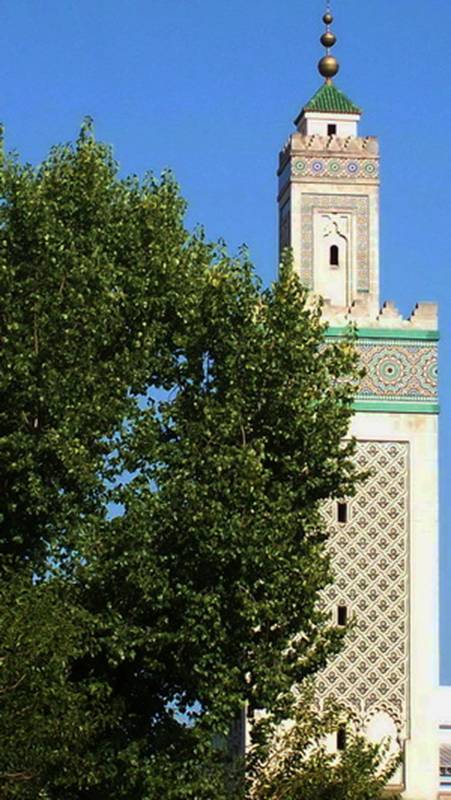
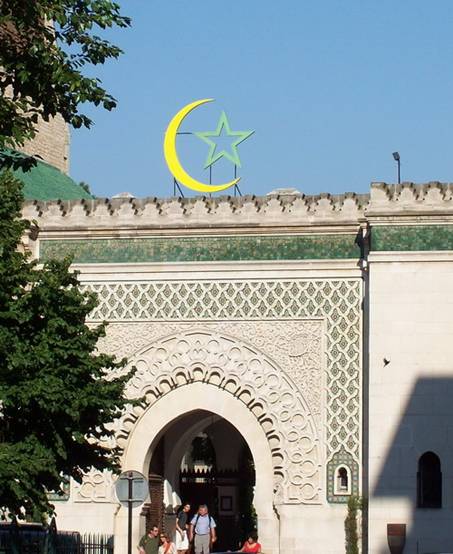
The
Paris Mosque.
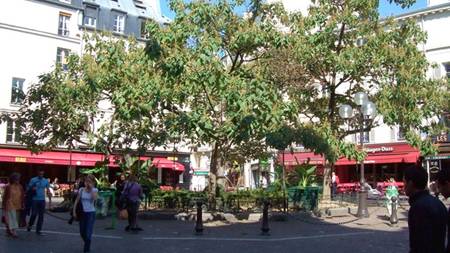
Place
de la Contrescarpe at the top of the rue Mouffetard. Sign
my guestbook. View
my guestbook. |