Paris Journal 2008
Sign
my guestbook. View
my guestbook. ←Previous Next
→ Barbara’s home page
|
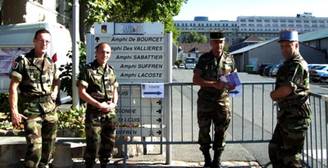
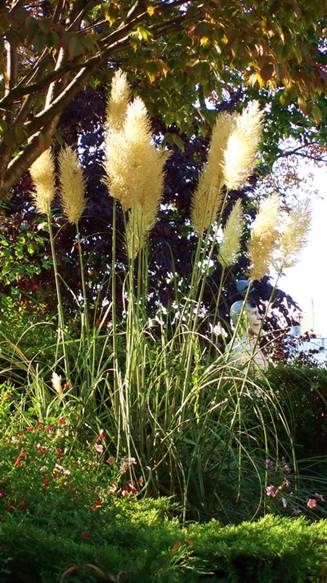
Yesterday we combined a “Cooley marathon walk” with sightseeing as we made our way through the first of two Patrimony Days. On Friday, we had studied all the listings (276 in Paris proper!) of places that are open and decided upon several that are in the left bank. Included are the Beaux Arts school, the National Assembly, and the Prime Minister’s headquarters for day one, then the Sorbonne and the Lycee Henri IV for today. But we knew that the National Assembly and the Prime Minister’s place might have tremendously long lines, so we had a back-up plan to go to the École Militaire (War College) and anyplace else we happened upon that looked interesting. The Beaux Arts school is a compound of several buildings arranged in a confusing way on 2 hectares of land just off the Seine at the quai Malaquais and the rue Bonaparte. These include interesting structures from the 17th, 18th, and 19th century and a dull building from the 20th. The oldest part was once a convent. During the Revolution, this was changed into a museum for French monuments. Even today, the two stately courtyards include some handsome sculptures. Just after the museum was established, plans were made to expand and include the complex in the Beaux Arts school. This work continued through part of the 19th century. Mostly we enjoyed seeing the two courtyards and the cloister. The first was part of an hotel particulier, or grand home, called the Hotel Chimay, dating to the 17th century but altered in the 18th. The other courtyard is the cour d’Honneur, dating to 1836 and home to a number of statues from the Hotel Legendre. The cloister, called the cour du Murier, has a lovely and very old mulberry tree and a fountain dripping with green moss. The cloister was rebuilt in 1836, and includes paintings in the style of Pompei and copies of Pantheon friezes on its walls. We left the Beaux Arts school and walked along the left bank of the Seine until we reached the National Assembly where we saw a very, very long line of people waiting to get in. The line was not moving at all. So we walked on down through the 7th arrondissement to the rue de Varenne, home to the Hotel Matignon, the Prime Minister’s headquarters. There was another long line, and it was only 1:30 (opening time was 2PM), so we went back to the Hotel Clermont which we had just passed on the way to the Hotel Matignon. The line wasn’t too long there, and by then it was 1:45. The wait until 2PM was made more pleasant by a man who distributed slick booklets about the Hotel Clermont. So we read about it before we saw it. The Hotel Clermont is now the headquarters for the Ministry for Relations with Parliament. Originally built between 1708 and 1714 for the Marquise de Clermont-Saissac, it was sold to the Count of Orsay in 1768. The Count turned it into a showcase for all the extravagant furniture and artwork that he habitually collected. In 1787, he went to live in Germany with his second wife, leaving the Hotel Clermont to a renter, the Englishman William Beckford, who was also an art lover and was known for his extravagant way of life. Evidently, the Count never got his spending under control. He never returned to his home on the rue de Varenne. Instead, he died in misery in a public hospital in Vienna in 1809. After the Revolution, the stately home passed through a number of owners’ hands. The national government acquired it in 1944, and it served several purposes before becoming home to the Ministry of Relations with Parliament. One walks through two courtyards before reaching the home. The entryway has a lovely oval etched glass “verriere” ceiling and bas-reliefs representing three seasons, summer, autumn and winter. The grand stairway occupies the corner where the Spring bas relief would be. It is lovely, but we weren’t given access to it so it was hard to see it completely. The most beautiful room is the salon doré, or golden parlor. It was designed by the famous architect Chalgrin for the Count of Orsay, who wanted it created for his first wife, the Princess of Croy. It has a neoclassical style, lots of gold leaf and carvings on its paneled walls, and five immense mirrors. This room alone cost the count a fortune. The Hotel also has other highly decorated rooms such as a gallery and dining room, and a very beautiful and formal French garden. The American painter, John Trumbull, reportedly visited the Hotel Clermont in 1786 and said “Go to the home of the Count of Orsay, which seems to be the most beautiful in Paris; it is full of elegant furnishings, very expensive, dazzling furniture. In the gallery, one finds the most beautiful collection of small works of the first quality; a Visitation of the Virgin by Rubens, the Descent of the Cross by Rembrandt, and the Infant Savior by Van Dyck are all superb. Little bronze copies of the best antiques, superb porcelains fill literally every room.” After seeing this splendid home, we went to the garden of another, at the Rodin Museum, to have lunch. This is one of our favorite places to go on a lovely day. You can get a high quality lunch and sit outdoors under big trees and not be disturbed by traffic noise. Tom had a baguette sandwich and I had a salad. He enjoyed feeding bits of bread to the sparrows. Fortified, we went on the War College, known as the École Militaire. We have walked past its fancy side, known as “the chateau,” hundreds of times on the avenue de la Motte Picquet. We’ve also walked by the back side, along the avenue de Lowendal and the puzzling, barren Place de Fontenoy hundreds of times, where we can see into the complex a bit, and where our curiosity about what’s inside has grown. This was our chance to see the inside. I was surprised that there was no security check as we entered. There were security checks at the Hotel Clermont and the Rodin Museum, of course. I guess these soldiers are not afraid of anything. After asking a few of them if I could take their picture, we went to the reception table where we were told that there would be a guided tour in a few minutes, starting at the white tents down yonder to the left. In a tent were chairs set up so that we could all watch a video about the École and its history. They call it the largest museum in the world, but since it isn’t normally open to the public, I wonder why they call it a museum. Plus, it is obviously a working military institution, not just a museum. Anyway, we watched the video. I could understand the French in the video pretty well. Then the video was turned off and an 80 or so year old man in civilian clothing began to deliver a lecture to us about the history of the development of the school. He spoke too softly and quickly, and he did not enunciate well, so we both struggled to understand. He was evidently boring many of the French families with kids. They continually split off and disappeared from our group. After speaking for almost a half hour, our lecturer took us out into the sunshine in the cour Morland and the cour d’Honneur and pointed out architectural details in detail. A wedding had just taken place in the chapel, and we enjoyed gazing off at the bride and her group as photos were taken in front of a row of very handsome columns designed by an architect named Gabriel. There is a restaurant and a bar which we did not see because they closed at 5PM, but the brochure we were given tells us that the fixed price menu at the restaurant is only €6! When our lecturer took us into the entry hall where the grand staircase is located, we heard a heavenly choir singing in the chapel, so we left the tour group and went in to listen. The music was beautiful, and so was the chapel. The music was slightly disrupted by the noise of drums – many drums. Tom went to the window and looked across the avenue de la Motte-Picquet where, at the near end of the Champ de Mars, fifty or sixty African drummers were pounding away. It sounded like an earthquake happening. We went up the grand staircase to the library of the College and the very elegant parlor of the marshalls. Our lecturer and group were in the parlor, but we were too tired to stay with them. We made our way slowly out of the War College and across the 7th arrondissement toward home, stopping briefly in a park to rest. After resting again at the apartment for a little while, we went out for a late dinner at the Bistrot de la Grille Saint Germain on the rue Mabillon, where we each had a nice veal chop with a rich dark demi-glace sauce and homemade pasta. Then Tom had an excellent dessert that involved mascarpone and figs. We met a very interesting couple from Colorado at the table next to us. We helped them with the French on the blackboard where the daily specials are listed. Indeed, they ended up ordering the veal chop and the ray meuniere from the blackboard, so we were pleased about that. We walked back to our apartment beyond the hulking Saint Sulpice church. And so ended another lovely day in Paris. |
Sunday, September 21, 2008
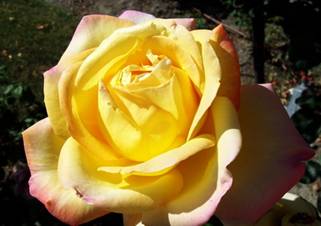
Yellow rose in the Rodin museum garden.
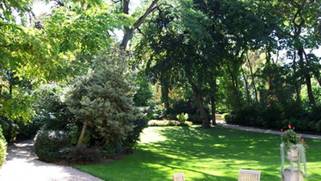
Garden at the Hotel Clermont.
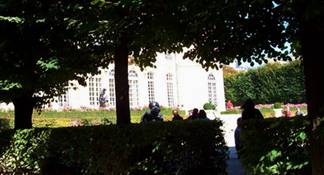
View of Rodin’s house from the café in the garden.
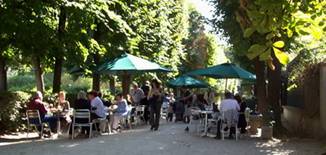
The café in the garden of the Rodin museum.
Great sculpted doorway in the garden of the Rodin
Museum.
Garden at the Rodin Museum with Eiffel tower in
background.
Soldiers at the War College, or École Militaire.
Decorative grasses in the quiet Square d’Ajaccio, where
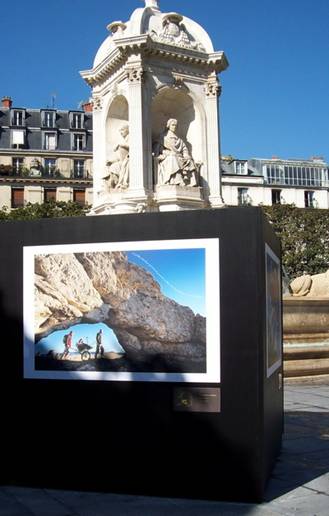
we rested briefly on the way home. A A photographic exhibit on the Place Saint Sulpice. |