Paris Journal 2010 – Barbara Joy Cooley Home: barbarajoycooley.com
Photos
and thoughts about Paris
Sign
my guestbook. View
my guestbook. 2009 Paris Journal ← Previous Next
→ ← Go
back to the beginning
|
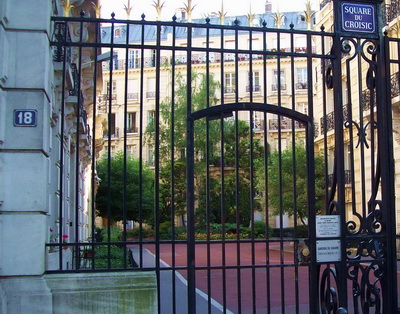
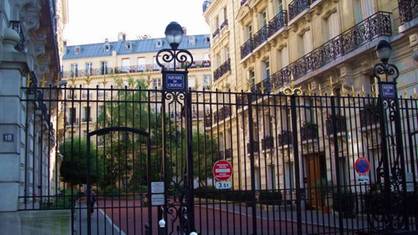
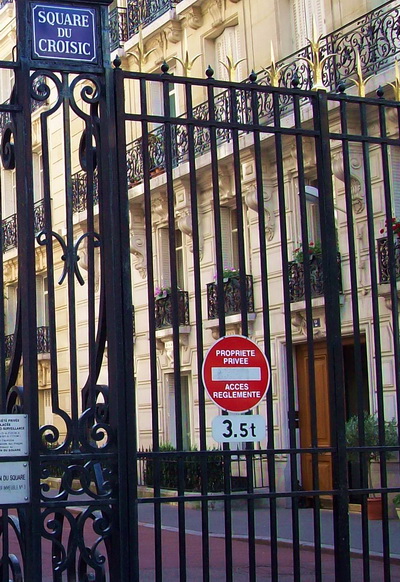
My good friend Nola, who is an internationally known expert on the subject of human trafficking, read my journal entry for yesterday. In summing up what the US State Department report says about French anti-trafficking laws, she wrote that France has “a far way to go even though they are in Tier 1. Like most countries besides the US, the victim services seem to be all about repatriation and it sounds like they need to do some media training as well.” “Tier 1” includes countries that are considered to be doing a somewhat adequate job of dealing with the problem of human trafficking, although obviously no country is doing a perfect job in this area. Speaking of “tiers,” as I have written in prior years, the French health care system is a two-tier system, with the public hospital/healthcare system available to all citizens, and the private hospital/healthcare system available to those who can afford it. Paris is riddled with huge, public hospitals. We walked by Necker, the enormous complex that comprises the public children’s hospital yesterday evening. Necker is no ordinary hospital; it is also a research center. You might recall that we walked by it earlier this month, and I then read about a photographic display of the work of a Colombian photographer that is supposed to be on the “grilles,” or iron fences, of Necker. I planned our walk last night to take us around the other side of the Necker complex, hoping to see this exhibit. We did not. It must be inside the complex, and even if one wanted to go in there, the evening is not the time to attempt it because it is closed to the public then. I say “even if one would WANT to go in there” because it is, in large part, a truly frightening looking place. Most of the buildings are old and beat-up to the extent that they even look haunted. I said to Tom, “I would NEVER want to take a child into a place that looks like that. It would scare her to death!” Whereupon Tom said, “well, the sign says it is for enfants malades.” Yes, enfants malades sounds like it means “bad children,” but it really means “sick children.” Bad children are enfants terribles. Necker looks like a place where one would want to put enfants terribles. In order not to embarrass the French public healthcare system too much, I’m only going to include one photo of one of the scary looking buildings in the Necker complex. But I chose one that is only moderately scary looking; there are scarier ones. The complex is within boundaries delineated roughly by boulevard Pasteur, rue de Vaugirard, rue du Cherche Midi, boulevard Montparnasse, and rue de Sevres. There are some private, Hausmannian buildings in that megablock, too, along the edges facing the streets, but for the most part, Necker occupies this large chunk of Paris real estate that is the eastern corner of the 15th arrondissement. On the northern side of the megablock is a new building under construction, with a sign that announces “Necker Modernizes Itself” in French. But the new building, in its unfinished concrete shell state, looks as frightening as the old buildings. Maybe that will change, but I don’t see a lot of imagination or architectural interest in the design of the new structure – at least not yet I don’t. In striking contrast to the look of Necker is a clump of gorgeous Hausmannian buildings on a private street, tucked into a non-Necker spot on the boulevard du Montparnasse side of the megablock. It is called Square du Croisic, and it looks like a fine place to live. Maybe this is where the doctors reside, who knows. Otherwise, though, that rule that seems to hold true almost everywhere seems to be true here: real estate values in the vicinity of big hospitals (or jails, etc.) are somewhat repressed. So our walk wasn’t through the most scenic parts of Paris, but it was very interesting. And parts of it were lovely. For example, there is a restaurant called Montparnasse 1900 on the boulevard that is an Art Nouveau gem. There are some photos on this web site to give you an idea why it is classified as a historic monument. I don’t know if the food is good there, but it is part of a group of restaurants called Gérard Joulie, which also includes Le Mouton Blanc and Bouillon Chartier, places where we have dined and enjoyed the cuisine very much. Not as lovely, but very interesting indeed was an earlier part of our route, along the rue Lecourbe from rue Mademoiselle to boulevard Pasteur. This stretch, which we’ve not walked for years, is like rue de la Convention and rue de Vouille in that it has a lot of very practical, not-so-expensive stores that meet everyday needs. This includes one housewares store which has some super-cute looking items in the window – I will go back there soon. There is nothing lovelier than the view up the broad, park-like avenue Breteuil as one crosses it at rue Lecourbe/rue de Sevres – at the end of this view is the splendid golden dome of Les Invalides. But our destination for the evening was farther down the boulevard Montparnasse: the Corsican restaurant l’Abri Cotier – a great place for eating seafood. It took us well over an hour to walk there. The restaurant opens for dinner a bit earlier than many – at 7PM. We were the first to arrive for dinner. As we studied the menu (which changes a bit every two weeks) out on the sidewalk, Madame noticed us and came out to greet us. She remembered us instantly, and was very warmly welcoming. She and the main server both remembered details about our dining and drinking preferences, and they hadn’t seen us since last September. What professionals! We shared a “mini ratatouille” appetizer that was beautifully and colorfully presented, and then I indulged in the divine sole meunière. Tom had some superb beef medallions. The resto started filling up well before 8PM – an early anomaly for a Paris restaurant on a Saturday night. We were able to comfortably finish our dinner and have enough time to walk all the way home without getting too terribly tired and having to walk through too much darkness in the less familiar and slightly spooky streets of that institutional part of the 15th. I should mention that in this dark institutional area, right across from Necker on its boulevard Pasteur side, is the huge Lycée Buffon (Buffon High School), built on the site of the former Vaugirard cemetery. Vaugirard is the village that was once outside Paris, and was located where the lower part of the 15th arrondissement is now. Here is one account of this former cemetery in Victor Hugo’s Les Misérables: On the following day,
as the sun was declining, the very rare passers-by on the Boulevard du Maine
pulled off their hats to an old-fashioned hearse, ornamented with skulls,
cross-bones, and tears. This hearse contained a coffin covered with a white
cloth over which spread a large black cross, like a huge corpse with drooping
arms. A mourning-coach, in which could be seen a priest in his surplice, and
a choir boy in his red cap, followed. Two undertaker's men in gray uniforms
trimmed with black walked on the right and the left of the hearse. Behind it
came an old man in the garments of a laborer, who limped along. The
procession was going in the direction of the Vaugirard cemetery. The handle of a
hammer, the blade of a cold chisel, and the antennae of a pair of pincers
were visible, protruding from the man's pocket. The Vaugirard cemetery
formed an exception among the cemeteries of Paris. It had its peculiar
usages, just as it had its carriage entrance and its house door, which old
people in the quarter, who clung tenaciously to ancient words, still called
the porte cavaliere and the porte pietonne.[16] The Bernardines-Benedictines
of the Rue Petit-Picpus had obtained permission, as we have already stated,
to be buried there in a corner apart, and at night, the plot of land having
formerly belonged to their community. The grave-diggers being thus bound to
service in the evening in summer and at night in winter, in this cemetery,
they were subjected to a special discipline. The gates of the Paris
cemeteries closed, at that epoch, at sundown, and this being a municipal
regulation, the Vaugirard cemetery was bound by it like the rest. The
carriage gate and the house door were two contiguous grated gates, adjoining
a pavilion built by the architect Perronet, and inhabited by the door-keeper
of the cemetery. These gates, therefore, swung inexorably on their hinges at
the instant when the sun disappeared behind the dome of the Invalides. If any
grave-digger were delayed after that moment in the cemetery, there was but
one way for him to get out-- his grave-digger's card furnished by the
department of public funerals. A sort of letter-box was constructed in the
porter's window. The grave-digger dropped his card into this box, the porter
heard it fall, pulled the rope, and the small door opened. If the man had not
his card, he mentioned his name, the porter, who was sometimes in bed and
asleep, rose, came out and identified the man, and opened the gate with his
key; the grave-digger stepped out, but had to pay a fine of fifteen francs. On the rue de Sevres on the way home, just a few minutes before 9PM, I noticed that we were passing a G20 urban grocery just before closing time. We needed coffee, so I tugged on Tom’s sleeve and said “Let’s go in!” It was a good idea, because the store had our favorite brand of Italian espresso, Lavazza, which is not available at Ed, and it was on sale! We stocked up. I’m happy to observe that G20 did not offer us a plastic bag for our two double packages of coffee. Instead, Tom tucked them under his arm as if they were a couple hardcover textbooks, and I put the dispenser of Canderel (sweetener) that we bought into the zippered side leg-pocket of my very practical Chico’s Zenergy pants. There was still some light when we arrived at home, so we sat on the balcony for a bit, enjoying a square of dark, rich Swiss chocolate, and then the day was done. Yesterday’s Tour de France stage was a cliffhanger of a time trial, the contre le montre, the race against the clock. It was decided that the Spaniard, Alberto Contador, is this year’s winner. We were slightly preferring that Andy Schleck, from Luxembourg, would win, but we really don’t like either of them all that much. They’re too young and brazen; life hasn’t knocked them around much yet. So today is the end of the Tour – the day the riders enter Paris. I do love to watch it on TV because of the helicopter views. The chateaux of the Bordeaux region were majestic sights yesterday, and today – well, there is no city more beautiful than Paris. And Paris from above is breathtaking. Bon Tour! Sign
my guestbook. View
my guestbook. Note: For addresses & phone numbers of
restaurants in this journal, click
here. |
Sunday, July 25, 2010
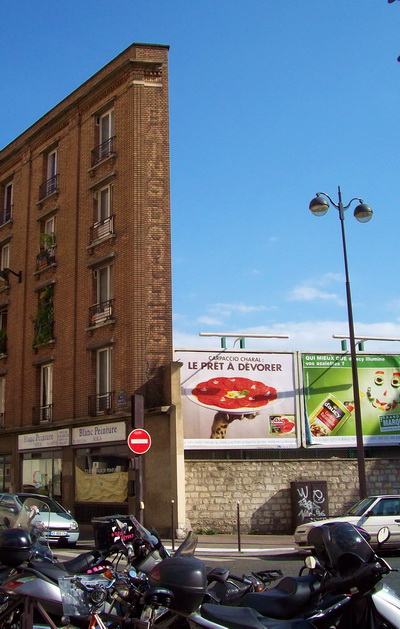
Near
the beginning of yesterday’s walk, behind the old theatre at the end of our
street, is a flatiron building that formerly housed public baths and showers
(“Bains, Douches”) for those who did not have indoor plumbing.
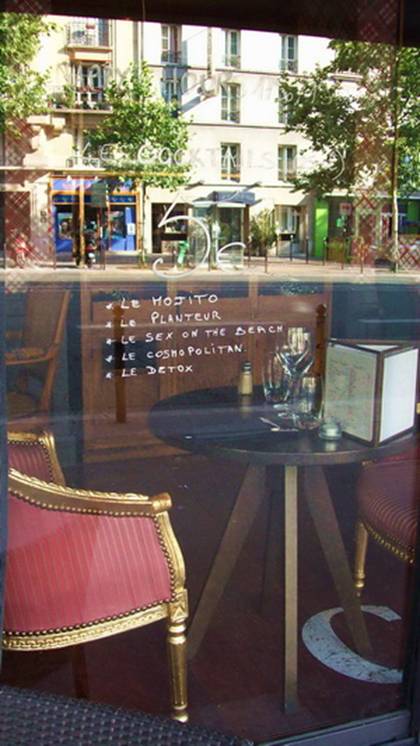
Lots
of places on the boulevard Montparnasse near the train station of the same
name cater to young tourists who like drinks with names like “le mojito” and
“le sex on the beach.” This
neighborhood is a beehive of human activity.
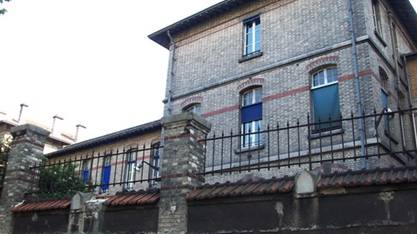
A
moderately scary building in the Necker complex.
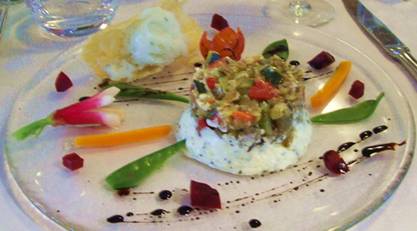
The
mini ratatouille at the Corsican restaurant, l’Abri Cotier.
A
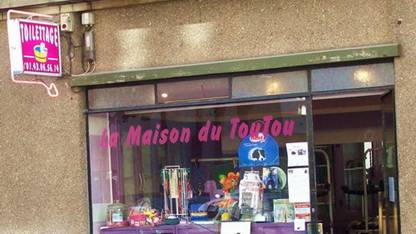
cute place to have your little dog groomed, on the rue Auguste Dorchain, a
street named for a French writer and poet.
The
Square du Croissic off the boulevard Montparnasse, surrounded on three sides
by the sprawling Necker hospital complex.
Note the lovely fence with its golden spikes on top.
|