Paris Journal 2010 – Barbara Joy Cooley Home: barbarajoycooley.com
Photos
and thoughts about Paris
Sign
my guestbook. View
my guestbook. ← Previous Next
→ ← Go
back to the beginning
|
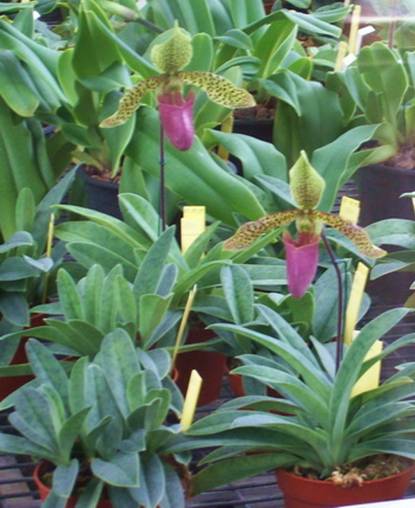
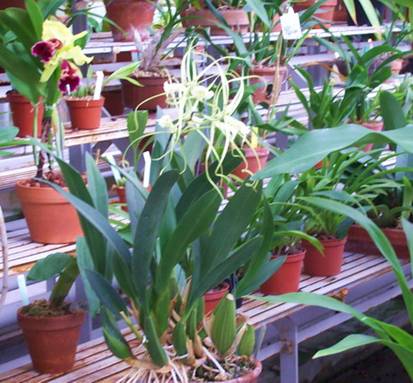
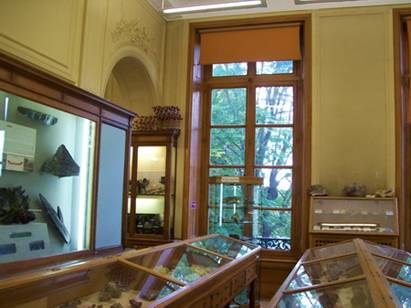
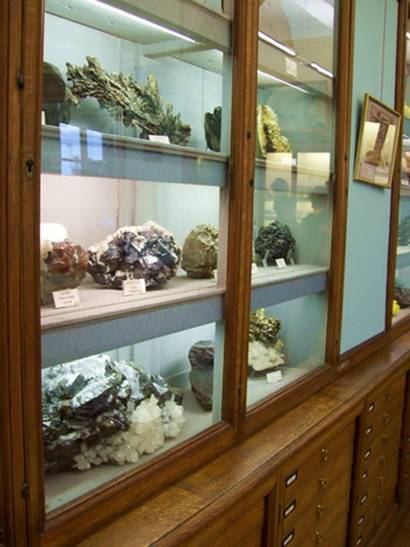
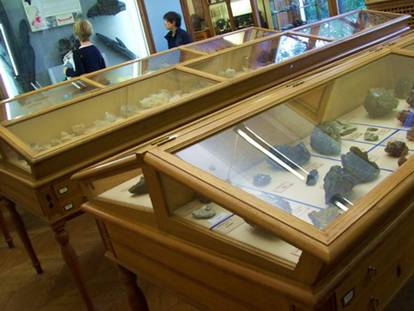
For the past couple years, we’ve tried to get into the greenhouses for the Luxembourg Gardens during Patrimony Days (Heritage Days), but it would be too far into the afternoon and the waiting line would be too long. So yesterday, we made that our first stop of the day. These greenhouses are not normally open to the public, as is true for much of what is featured throughout Europe on Patrimony Days. The greenhouses exist for the purpose of keeping the park looking stunningly beautiful, as it always does. What I didn’t expect was the lovely garden that was also in the area around the greenhouses. I never knew there were so many showy kinds of dahlias! The flowerbeds in the area around the greenhouses were not only beautiful, but also educational, because just about all the plants were labeled by little signs. The first several greenhouses featured things like ferns, bromeliads, other air plants, a fascinating variety of special begonias, etc. While some of these are plants that we have in our front or back yard because we live in South Florida, I am sure they seem exotic to most people. The special greenhouse was the last one and largest one, where, interspersed with other plants, are many wonderful orchids. Obviously, the orchids are not meant for the public park. They are for the Senate, in the Luxembourg Palace. We watched one of the gardeners preparing an orchid for re-potting. I found this to be instructive. I didn’t realize how much cutting back on the roots was supposed to be done before the orchid goes into its new pot. A bit before that, we listened to another gardener explain to a young boy the purpose of the greenhouses. Plants were started from seed in the winter, raised to be a certain size in the greenhouse, and then planted into the flowerbeds of the gardens, starting in the springtime. The beds are constantly tended and replanted throughout the spring, summer, and fall. In the winter, many of them have all the flowers removed and are covered over by sod that perfectly matches the grass already surrounding the beds. All of this is done according to an elaborate plan that is laid out day by day, week by week, throughout the year. I think most people were there to see the orchids. We were handed a few flyers when we had entered the greenhouse area. One of them announced that it was possible to leave the greenhouse/garden area by a back gate and enter the garden, then the Hôtel de Vendome, which houses the School of Mines and the Mineralogy museum. We had not planned to go there, but we decided, why not? I’m glad we did. The entire area around there evidently was, at the beginning of the 18th century, the property of the Chartreuse de Vauvert monastery. The widow of the duke of Vendome rented the Hôtel de Vendome and hired an architect named Le Blond to enlarge it. Le Blond was famous for his work in St. Petersburg, Russia, where worked for Pierre Le Grand (Peter the Great). After the duchess died from alcoholism, a number of other renters occupied the great house until the School of Mines became one of them. In 1837, the School purchased the entire hôtel particulier (mansion, or stately home) and its garden. By the way, there is a large network of mines beneath Paris. Some are ancient – dating to way back before 1200. The Chartreuse used old mines under their property as wine cellars. It is illegal to explore the old mines under Paris. In the 1700s, the Hôtel de Vendome had a paved courtyard, which has since been filled in to create more space for the library and museum of mineralogy. In 1860, when Haussmann was creating the grand boulevards of Paris, the building had to be changed again to accommodate the creation of the boulevard Saint-Michel. The library has a handsome, traditional reading room that was created in 1927. The most recent improvement to the library was in 1989, when five kilometers of stacks were created beneath what was once the paved courtyard. For Patrimony Days, the reading room was decked out with many big posters, each featuring an important scientist or engineer who had been associated with the School. The real jewel of the Hôtel de Vendome, I think, is the museum of mineralogy. It occupies the first floor (one level above street level) of the building. A grand staircase whose walls are covered by fine paintings that reminded us of Bierstadts lead us up to the museum. The contents of the museum – lots of fascinating samples of rocks of all kinds – are interesting enough, but I also loved the rooms themselves, and especially all the oak showcases and vitrine tables. The museum consists of about a thousand square meters. The oak used to create all the 19th century cabinetry came from large trees in Hungary. We discovered an interesting looking cafeteria in the building’s ground floor that just might be open to the public. We might try it sometime. A glass case fitted into one of its walls features unusual, large sea shells. The School of Mines is now known as MINES ParisTech. It has been around since 1783, but has expanded its work over the years to include other technologies such as telecommunications and even economics. After that, we went to the prestigious École Nationale d’Administration, where all the influential énarques receive their two years of intensive training. It, too, is in a building situated on land once owned by the Chartreuse monastery. Its building has an interesting eastern motif, with beautiful, recently restored mosaics. The visit there was a guided one, and by the time we left, our heads were very tired from trying to concentrate and understand the rapidly spoken French of our tour guide. I was surprised that the school has so much focus on education of students from other countries. We rested and read newspapers for a little while, and then we were as good as new. In the evening, we went out for another jazz concert in the Luxembourg Gardens. This was by the BB15 big band. BB15, evidently, stands for Big Band from the 15th arrondissement, and consists of amateur musicians. Sometimes they sounded good, and when their female vocalist finally joined them, they were very good. But the drummer was nothing special – in fact, he was not good at all. This big band could benefit from Tom’s talents – he is a far superior drummer. When the concert ended at 6:30, we walked for an hour along the rue Vaugirard and a few other streets to reach Roy and Barbara’s apartment for drinks. Then the four of us walked down the avenue Felix Faure for an interesting dinner at Casa Eusebio, a Spanish restaurant. I think it is good and authentic, but it features country cuisine from Spain, which I find to be heavy and not all that interesting. Plus, the shrimp included in my main course were overcooked and dry. But the other three were quite happy with their dinners. I did like the server very much. She was an energetic blond who was well-informed and enthusiastic about the food. She also had a slightly goofy smile, which was charming. Roy was in good form, and we enjoyed the conversation a lot. At the end of a long dinner, we took the metro home and slept well. Sign
my guestbook. View
my guestbook. Note: For addresses & phone numbers of
restaurants in this journal, click
here. And here’s the 2009 Paris Journal. |
Sunday, September 19, 2010
Orchids
in the Luxembourg Garden’s working greenhouses.
One
corner of the fascinating mineralogy museum in the Hotel de Vendome.
|